

STILL LOUD, STILL LOVED
By Malika Joshi in Conversation with Cobweb Band Nepal
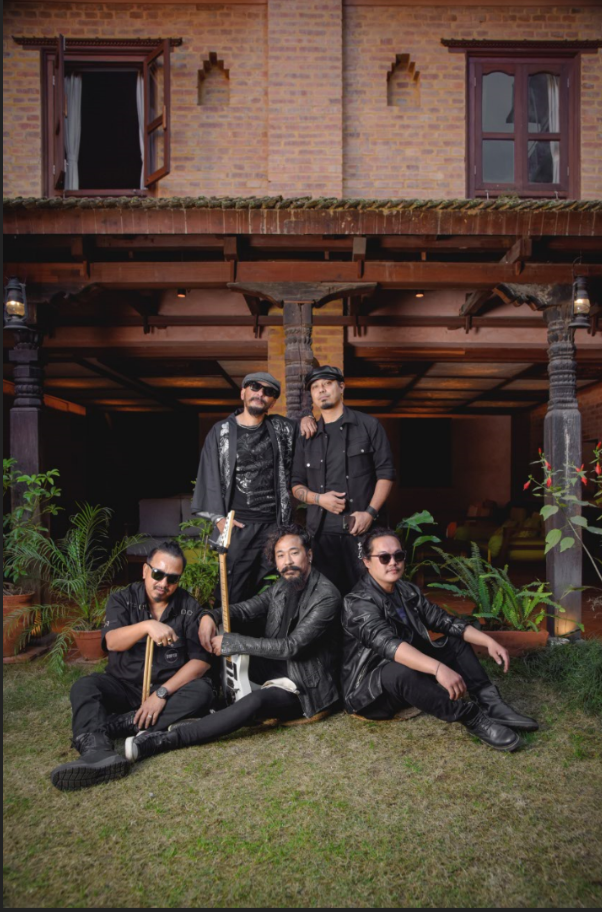
Introducing the rock and roll band from Nepal in their 30’s – Cobweb. Formed in Patan in the early 1990s by a group of friends, Cobweb is one of the most influential rock bands in Nepalese music scene. At a time when rock was not very popular to the mainstream, Cobweb introduced a louder, bolder sound to Nepal’s music collection. With their hard rock roots and fearless attitude, the band played a key role in bringing Western-style rock into Nepal’s popular culture and inspiring generations of musicians and fans.
Cobweb began their journey with debut album ‘Anjaan’ in 1993. While it didn’t gain immediate commercial success, the band’s real breakthrough came with their self-titled album ‘Cobweb’ in 1996, featuring the iconic track “Maryo ni Maryo,” which became an anthem for Nepali youth. Over the next three decades, Cobweb continued to evolve, experimenting with genres while releasing multiple albums and performing across Nepal and around the world. Despite little knowledge, expertise, and early resistance from conservative audiences, Cobweb remains still loud and still loved, standing as an OG band of Nepal’s rock scene.
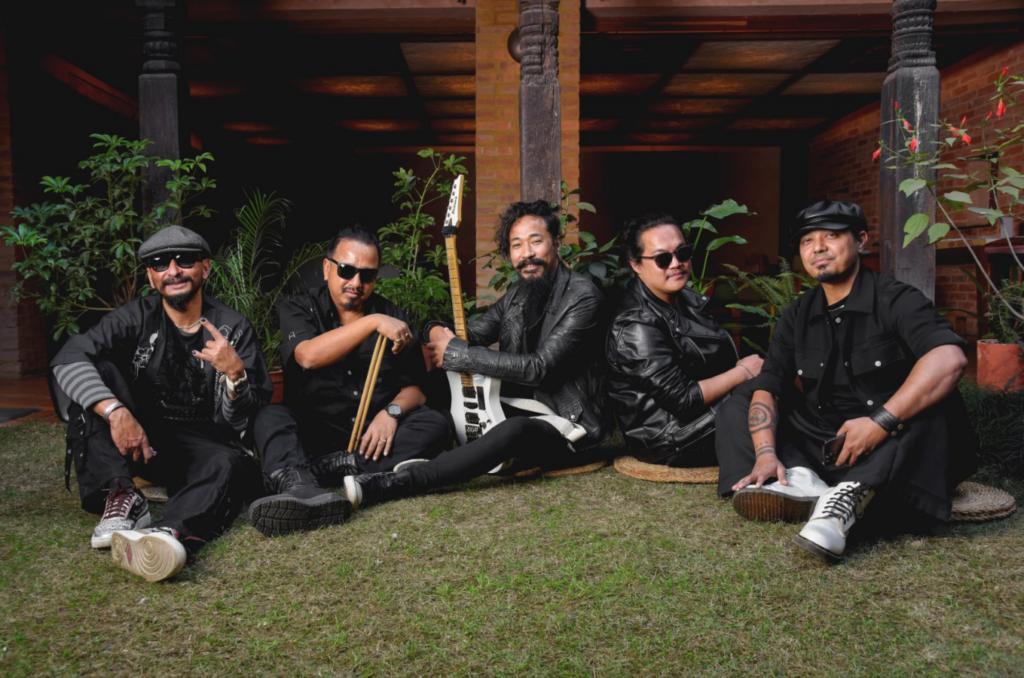
Nilesh Joshi and Divesh Mulmi have been part of Cobweb since its establishment, forming the core of the band from the very beginning. Siddhartha Dhakhwa joined the group in 1997/98, strengthening the rhythm section and adding new energy to their sound. While lately, in the past four to five years, the band has been further complemented by Ashish Gurung and Sujan Tandukar, bringing fresh dynamics while staying true to Cobweb’s long-standing rock identity. Abhisekh Pun, sound engineer and Chirag G.T, stage manager has been the ‘behind the spotlight’ supporter.
How was the music industry, before the band’s establishment? Cobweb is said to be the pioneers in rock music, do you feel the same?
Before Cobweb began, the rock music scene in Nepal was very limited. There were hardly any promoters, producers, or distributors, so bands had to manage everything on their own. Today, the industry is much more organized, with knowledgeable people who understand music as both art and profession, making it easier for musicians.
We’ve never really seen ourselves as pioneers of rock music. We were simply doing what we loved. Rock was the genre we connected with the most, and we chose it naturally. If our journey helped shape the scene in any way, we’re grateful, but we still feel there’s a lot more to do and we’re working on it. Looking back, the last three decades feel like the first chapter of Cobweb. Now, with more experience and clarity, it feels like we’re starting a new chapter.
Going back to the 90’s, how was the music and concerts reached among the fanbase?
Back in the 90s, life was very different! To connect with fans, sponsors, or event managers, we had to rely entirely on letters. We would receive invitations or proposals through letters and reply the same way, often following up in person since there was no internet and only a landline for phone calls. Print media was our main publicity tool, we designed and printed our own posters and personally put them up on college walls, electric poles, and other public spaces.
Our very first performance was at a community festival in Ikhachhen. But our first proper concert as Cobweb, with ticket sales and promotion, was at City Hall (now Rastra Sabha Griha). We sold tickets by hand, without promoters or sponsors.
Can you talk a bit about your dedication towards fueling the passion to successfully create a career and fandom out of it?
Our journey began with a simple love for music. While exploring Western rock genres, we never imagined forming a band. Everything changed after the release of “Maryo ni Maryo” in 1996. That song introduced Cobweb to the audience and inspired us to dedicate ourselves fully to our passion, turning it into a career and building a loyal fanbase.
In the early days, we would record one or two songs and personally approach music shops, requesting them to include our tracks in their collections, which were like the Spotify playlists of that time. We faced rejections, but we accepted them, re-recorded, and kept pushing forward. Eventually, Image Channel approached us to create a music video for “Maryo ni Maryo,” officially introducing Cobweb to fans and cementing our place in the music scene. Nilesh’s brother and a few friends invested in the band, helping us get started. That was the beginning of our journey.
Did the music shape your individual personality or is it other way around?
We’d say it’s a bit of both. Initially, rock and roll fashion and personality influenced us first. We’d see Western rock artists and, if we liked their style, we’d listen to their music. Their posters filled our walls and shaped our personal style. After forming the band, our music and personalities became intertwined; our fashion and image now reflect the band itself.
Fun fact: On recent years, Cobweb came up with new rule: hoodies and sweaters are completely off-limits for on stage performance, even in foggy cold weather.
Mental Burnouts, friendship fractures, creative clashes in the past three decades?
There’s definitely a lot of mental burnout. These days, I (Divesh Mulmi) have realized that songwriting and composition are extremely demanding tasks. They require immense patience, and doing the same thing every day can become monotonous, so taking breaks is essential. It also helps to have support from others, their expertise can guide us. For instance, working closely with Aashish Gurung (vocalist) recently has significantly reduced the pressure I feel.
Regarding friendships, there haven’t been any serious fractures, so that’s actually a wrong question for our band! We even have a funny rule: nobody’s allowed to get angry, haha. While we enjoy our fair share of fun, we remain disciplined in our profession either during recordings, practice sessions or other operations. Besides regular practice, often meet casually for a cup of coffee.
As for creative clashes, they are natural, but they get resolved easily because we truly listen one another, and there’s no room for anger. Each of us has a unique creative perspective, and clashes often open doors to ideas we might have otherwise missed. Sometimes, these clashes even help us reach a higher creative ground and improve our music.
” Ashish Gurung, vocalist, says, “It’s always been a family, with welcoming energy. Ever since joining the band, I’ve been living the dream and I’m still living the dream.”
The songwriting process
When I write a song, I create a focused zone. I usually start by picking the theme, then try to draft a chorus or verse line. After that, I often split the work among bandmates or friends to contribute their perspectives on the topic. Research is also a crucial part of our process. Since the ‘Astitwa’ album, our songs have reflected higher lyrical standards and deeper content. The lyrics in the 90s were simpler, but as the band evolved, we aimed for more powerful, meaningful lyrics. The more we work, the higher our standards become.
How’s the Band relationship as of current situation?
“ are family, the band, all of us look at it at as our family. Not just the 5 of us but also our technical team including sound engineer and our band manager. I feel personally very happy to see the bond we have, the understanding we have with each other and also our communicative approaoch. It’s been almost 35 years of the brand, the bond we have contributes to it. We try to share positive energy with each other.” Nilesh Joshi
Ashish Gurung, vocalist, says, “It’s always been a family, with welcoming energy. Ever since joining the band, I’ve been living the dream and I’m still living the dream.”
Sujan Tandukar adds, “Same for me, it’s always felt like a family. Since joining, it’s been a fun and fulfilling experience.”
The industry has changed so were there pressure to remain relevant?
I don’t think we feel that kind of pressure. At Cobweb, we are always focused on evolving. Whenever we release a song, some listeners prefer to have “old Cobweb vibe,” while others say it’s too similar to our previous work. But our core fans understand and appreciate our growth.
We choose to evolve and express the experiences and lessons we’ve gained through our music, while still maintaining the essence of Cobweb and respectying the audience’s choice too. More than trying to stay relevant, for us it’s about growing and creating music that reflects who we are now and the legacy we’ve carried for 30 plus years.
Today’s crowd vs the crowd of 90’s are they anyway different or similar?
They’re similar in their enthusiasm, but the way they engage has changed. In the ’90s, audiences would focus entirely on the performance and listen closely, rather than trying to capture it on their phones. Today, fans often like to record and share the moment, which isn’t a bad thing at all.
In many ways, though, the two crowds can’t really be compared. Back then, attending a concert was a bigger effort: tickets had to be purchased from an outlet, even Rs. 25 was a significant amount, and getting to the venue wasn’t always convenient. Despite the differences, the love of the audience has always been the same.
What’s one song that is very dear to your heart?
Ashish Gurung: For me, it’s ‘Timro Nau’. I feel there’s no other song like it, it’s unique and creates a completely different zone.
Nilesh Joshi: ‘Timro Nau’ as well. Every time I play it, even during practice, it feels surreal. It gives me high vibrations and I feel genuinely very happy from within.”
Divesh Mulmi: “I’m attached to Rukh. There are so many small sections where I’ve invested a lot of effort; eight different grooves, melodies, and lyrical compositions. That effort makes me feel deeply connected to the song.”
Sujan Tandukar: “’Hodbazi’. We don’t perform it often but it remains my favourite; it’s a bit dark, slow, and emotional.”
Siddartha Dhakhwa: “I also love Rukh because of its many variations, it keeps the song interesting and engaging every time we play it.”
Abhiseskh Pun: “Maryo ni Maryo” was the first song of Cobweb that I listened . At Purple Haze, I remembering shouting for it, and they played it; made me love it even more.
Chirag G.T: I love Samaj from the Astitwa album for its heavy riffs, rhythmic changes, and deep lyrics. To me, it’s Cobweb’s progressive song