


By Chef Sandeep KC (PakMaharishi)
The past year reminded us of something simple yet powerful: the human body is designed for rhythm, not rush. Despite the noise of digital life, the constant work deadlines, and the pressure to perform, 2025 quietly forced people to slow down. Our appetite changed, our digestion changed, and even our relationship with food shifted. For many Nepali households, this was the year when people finally understood that nutrition is not just about ingredients rather it is about timing, season, behavior, and emotional balance.
As we enter 2026, a year symbolically aligned with Rahu’s influence, a year known for extremes, trends, and unpredictability, our food habits and wellness routines will face their biggest test. Logic and Ayurveda together suggest that next year will reward grounded discipline and punish impulsiveness.
This is the moment to examine what we learned, what we lost, and what we must carry forward.
How 2025 Changed the Way We Eat
This year, families returned to warm, slow-cooked, comforting foods. Not because it was fashionable but because the body demanded it. Heavy workloads, unstable sleep patterns, and emotional fatigue made people crave grounding meals.
Three big patterns became clear:
- Warmth Became Medicine
Soups, broths, ghee, porridges, dhindo, thukpa, gundruk, millet rotis, and bone broths dominated home kitchens. Ayurveda explains this perfectly: when mental stress increases, Agni becomes inconsistent. Warm foods restore the digestive fire and stabilize mood. - Fermentation Returned as a Silent Healer
Gundruk, sinki, achar, curd, kombucha, kimchi and even simple rice kanji made a comeback.
The gut needed help after a year of irregular sleep and increased screen exposure. - People Ate Out More, Yet Trusted Home Food More
Restaurants thrived, but everyone admitted: home-cooked food made them feel lighter, calmer, and more stable.This duality reflects the fire-and-ice nature of our year.
Ayurveda’s Reading of 2025: A Year of Vata Instability
Across the board, Vata-related symptoms increased:
• Dry skin
• Anxiety
• Light sleep
• Inconsistent appetite
• Craving salty and tangy foods
• Digestive irregularities
Urban lifestyle, high caffeine, late-night content consumption, and emotional stress created a perfect storm. Ayurveda teaches that Vata thrives in chaos and this year proved it. The answer was predictable yet ignored: warm meals, early dinners, enough oil, enough rest.
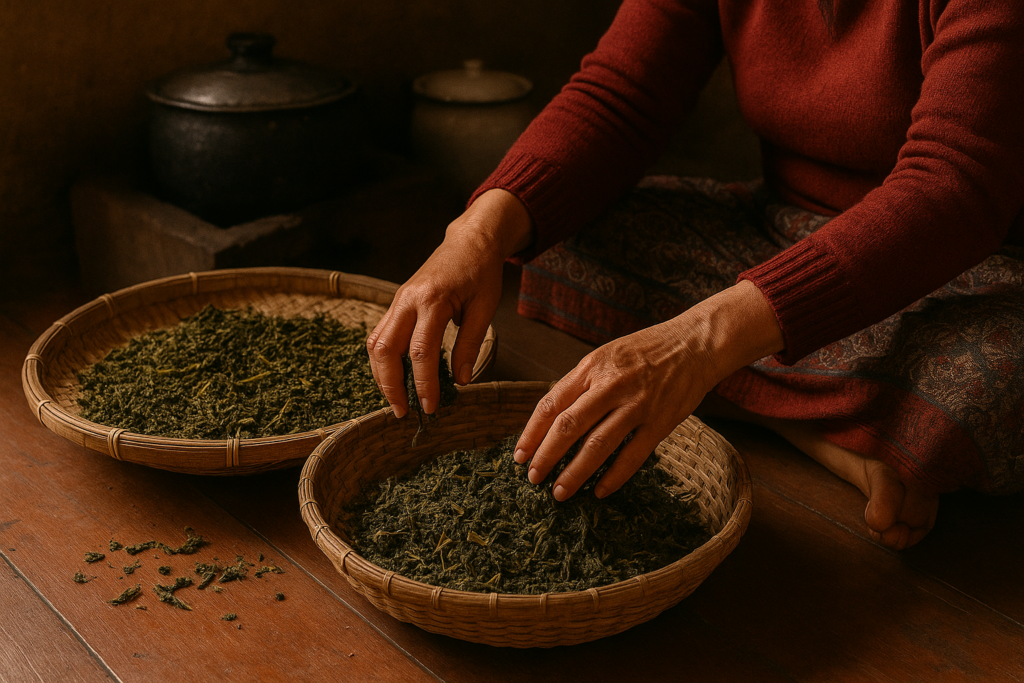
2025 was a reminder that the oldest science is still the most accurate.
2026: The Year That Will Test Our Food Wisdom
If 2025 slowed us down, 2026 will shake us awake. Astrologically, Rahu energy influences impulsiveness, viral trends, shortcuts, excess stimulation, exactly the opposite of slow food and mindful living. Logically, this aligns with global food industry predictions: fast trends, artificial flavors, ultra-processed products, synthetic colors, and hyper-palatable snacks will rise again.
The challenge will be simple:
Will people follow wisdom or follow trends?
What Will Thrive in 2026 (Logic + Ayurveda + Market)
Gut Health Will Become Central
More fermented foods.
More probiotics.
More digestion-focused menus.
People will finally accept gut health as the foundation of immunity.
Himalayan Ingredients Will Rise
Jimbu, timmur, buckwheat, millet, sea buckthorn, buransh, churpi, yak ghee, and native greens will step into mainstream spotlight. Rising import costs will push consumers toward local produce.
High-Protein Comfort Foods Will Lead
Bone broth, thukpa, shorba, barley soups, and slow-cooked meats will outperform salads and cold bowls. People will want warmth and strength, not confusion.
Minimalist Menus in Restaurants
Fewer dishes.
More identity.
More signature plates.
Consumers will prefer honesty over quantity.
Home Cooking Will Return Stronger
Carrying lunch to office will become a trend again.
Family dinners will rise.
Cooking will be used as therapy.
Caution for 2026: What to Avoid
To survive Rahu’s impulsive energy and the global food cycle readers must take these warnings seriously.
Avoid These Food Behaviors:
• Cold foods in winter
• Skipping breakfast
• Overeating at night
• Eating during emotional stress
• Ultra-processed snacks marketed as “healthy”
• Excess caffeine
• Mixing too many ingredients in one meal
• Following viral food trends without logic
Avoid These Lifestyle Traps:
• Comparing your wellness to social media influencers
• Obsessing over body image
• Sleeping late
• Watching content during meals
• Ignoring small digestive symptoms
• Confusing stimulation with nourishment
Rahu years reward clarity and punish confusion. So does Ayurveda. So does digestion.
What Every Family Should Focus On
• Fermented items for gut strength
• Warm foods, early dinners
• Local vegetables over imported “superfoods”
• Slow cooking, slow eating
• Sunlight exposure
• Breathwork and gentle movement
• Predictable sleep timing
• Drinking hot water during cold months
Final Message: Wisdom Wins, Not Trends
2025 slowed us down. It reminded us that true nourishment is not found in viral recipes, supplements, or diet labels. It is found in routine, season, discipline, and emotional balance.
2026, however, will challenge that maturity. It will push us toward shortcuts, distractions, and fast answers. This is the year when our food habits, wellness choices, and Ayurvedic instincts will be tested.
Those who stay grounded will thrive. Those who rush will repeat old patterns.
Slow food, warm food, and mindful food will be the real luxury of 2026.
The Nepali Ferment MOST Likely to Become a 2026 Star
Gundruk will become the face of Nepali gut health in 2026.
Why
• Clean, natural, zero-additive
• Perfect story for global wellness
• Fits café culture (soups, bowls, salads, dips)
• Perfect for winter immunity
• Nepal’s most exportable fermented food identity
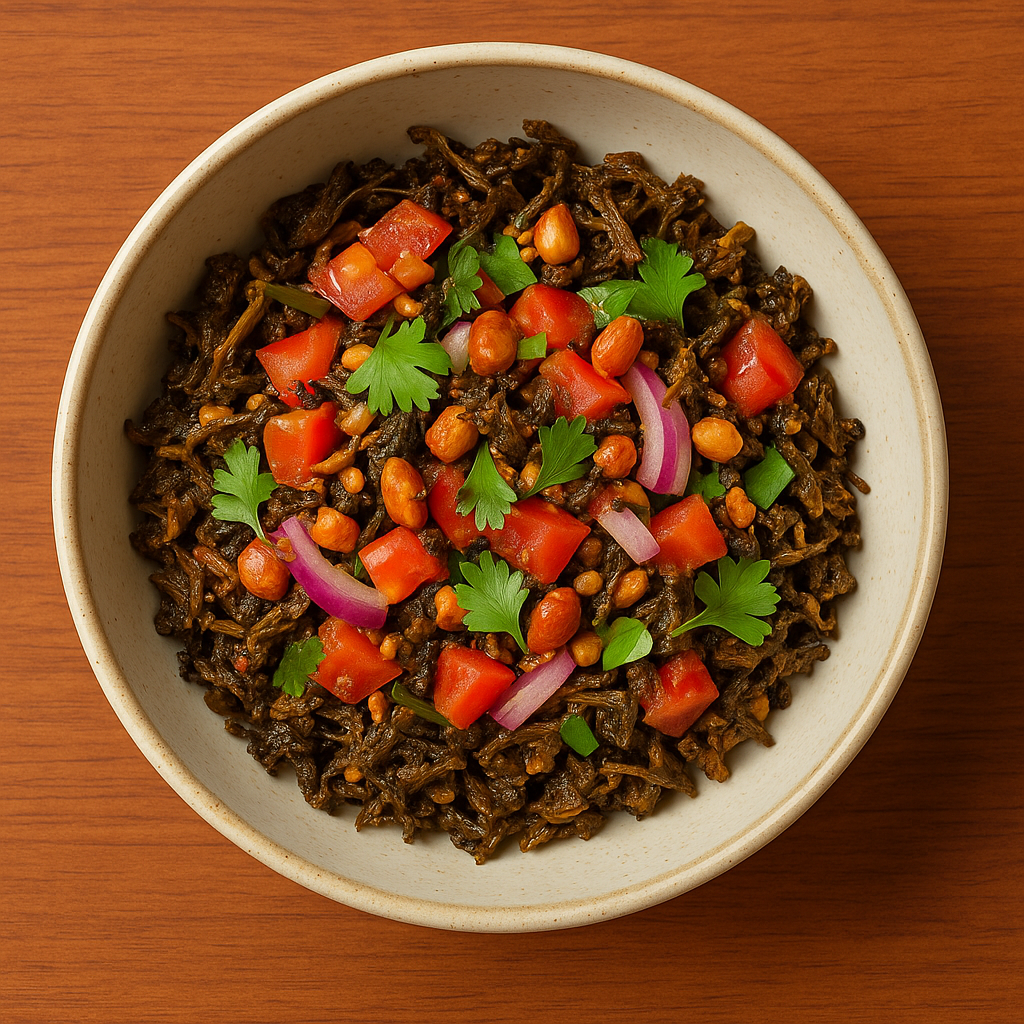
Ayurveda Gundruk Salad
(Warm-cool balance, digestive, high-fiber, probiotic, winter-friendly)
A heritage Thakali-style crunchy salad with Ayurvedic balance: sour for Agni, fat for Vata, mineral-rich greens for Kapha. A modern plate with ancestral logic.
Ingredients
• 1 cup dry Gundruk (rehydrated & lightly toasted)
• 1 small onion, sliced thin
• 1 small tomato, diced
• 1 tbsp roasted flaxseed or hempseed
• 1 tbsp mustard oil (cold-pressed)
• ½ tsp timmur (Sichuan pepper) powder
• ½ tsp turmeric
• 1 tsp lemon or lapsi juice
• 1 tbsp chopped coriander
• Salt to taste
• Optional: diced cucumber, roasted peanuts, fermented radish strips
Preparation
• Rehydrate the gundruk in warm water for 10 minutes, squeeze lightly.
• Dry roast the rehydrated gundruk for 2–3 minutes until crisp (crunchy inheritance).
• Mix onion, tomato, coriander, flaxseed, and peanuts.
• Heat mustard oil until warm (not smoking) and pour over the mixture (traditional “jhaneko” inspiration).
• Add turmeric, timmur, salt, and lemon/lapsi juice.
• Toss well and serve immediately for maximum crunch.
Ayurveda Note
• Mustard oil + timmur improves circulation, warms Vata.
• Gundruk supports Agni and gut flora.
• Perfect for late winter lunch, not night.
” Just as Europe transformed simple leafy greens into the modern salad movement, Nepal has always had its own system of preserving nutrients.”
Chef Sandeep KC
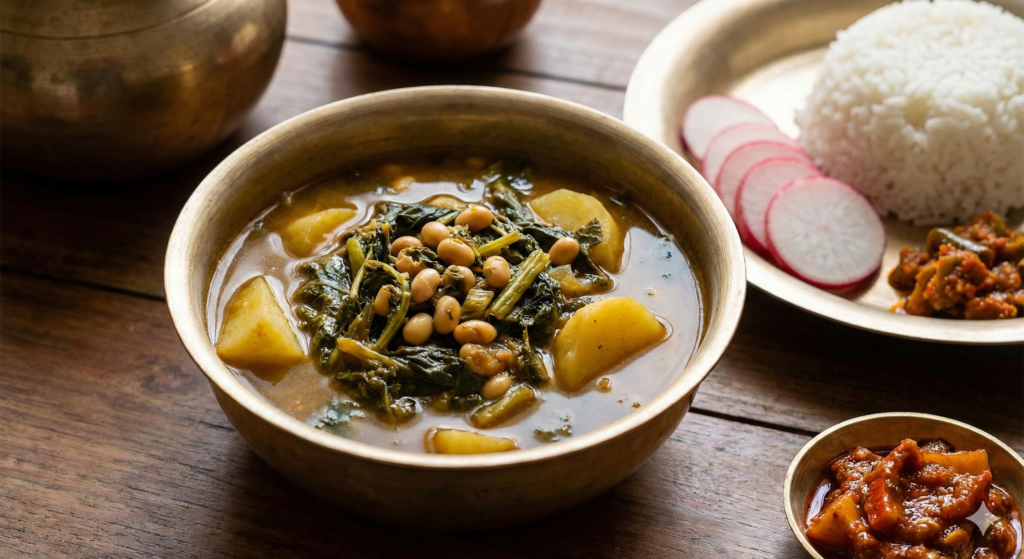
Gundruk Kimchi Soup
(Deep gut nourishment + winter warmth + probiotic clarity)
Thakali tama–gundruk–jhol meets Korean kimchi broth. A warming soup that blends Himalayan fermentation with global retro flavors.
Ingredients
• 1 cup gundruk (rehydrated)
• ½ cup kimchi (Nepali radish kimchi or Korean)
• 2 cloves garlic, minced
• 1-inch ginger, minced
• 1 tsp timmur-infused ghee or mustard oil
• 1 tbsp soy sauce (or chhyang reduction for authenticity)
• 4 cups vegetable or chicken stock
• ½ cup tofu or chicken pieces
• A pinch of turmeric
• Salt to taste
• Spring onion for garnish
Preparation
• Heat ghee/mustard oil, add garlic + ginger, sauté until aromatic.
• Add kimchi and stir for 1 minute to “open up” the fermentation profile.
• Add gundruk and turmeric. Mix well.
• Pour in stock, simmer for 10–12 minutes.
• Add tofu/chicken and soy sauce, simmer 3 more minutes.
• Finish with a dash of timmur powder and spring onions.
Ayurveda Note
• Fermented foods must be warm, never cold, in winter.
• This soup balances Vata (warm broth), Kapha (fermented acidity), and Pitta (cooling tofu).
• Excellent for digestion, metabolism, and winter immunity.
Crunchy Gundruk “Warm Bowl”
Ingredients
• Crunchy roasted gundruk
• Red rice or millet base
• Sauteed spinach or rayo saag
• Roasted peanuts or chhurpi cubes
• Achar vinaigrette (nepali lemon, timmur, mustard oil)
Preparation
• Layer warm millet/red rice.
• Add sautéed greens, crispy gundruk, and chhurpi or peanuts.
• Drizzle achar vinaigrette.
• Serve warm; never cold.
Conclusion
For generations, Gundruk was labelled a “poor man’s food” or “peasant food”, a survival ingredient created from necessity, winter scarcity, and mountain discipline. But 2026 is the year to rewrite that narrative. Just as Europe transformed simple leafy greens into the modern salad movement, Nepal has always had its own system of preserving nutrients: drying, fermenting, sun-curing, and harnessing every leaf, stem, and stalk available.
Our strength has never been industrial farming. From mustard greens to buckwheat leaves, from red amaranth to squash vines, pumpkin stems, taro leaves, radish leaves, and every edible wild green, Nepali cuisine built its immunity on foliage long before nutrition science described vitamins and minerals.
This is why Nepal has fewer raw salads than the West. We never needed a salad revolution; we already had an ancestral leafs. We fermented our greens for winter, stewed them for warmth, sun-dried them for survival, and turned scarcity into nourishment.