


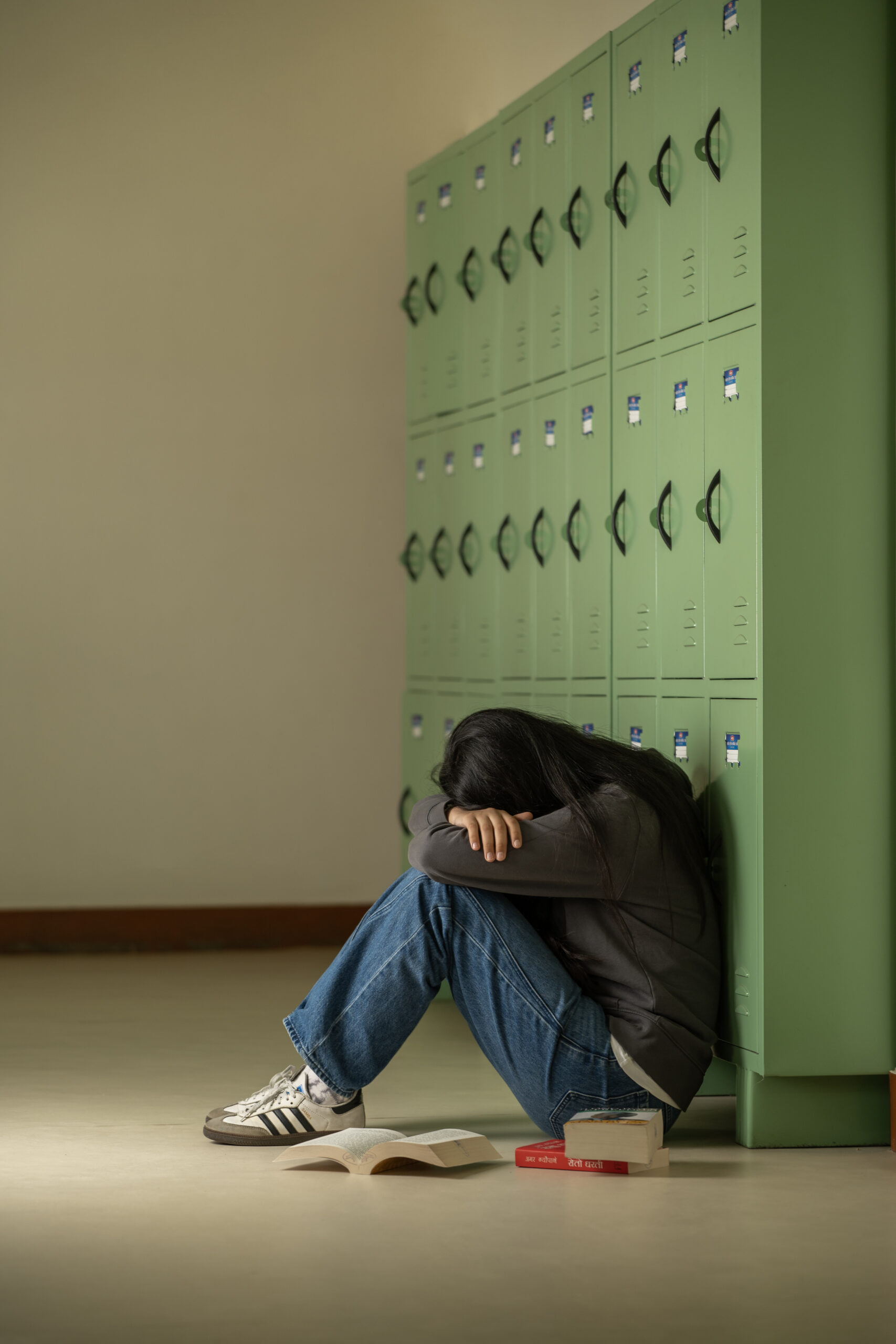
By Malika Joshi, in coordination with Psychologist Sneha Agrawal & Swostishree Gurukul IB World School
Adolescence has never been simple, but the world teenagers are growing up in has become increasingly complex. Between academic expectations, friendships, family pressures, social media and the constant pressure to keep up, emotional struggles can easily be mistaken for ordinary teenage behaviour. A change in mood may be called a phase. Withdrawal may be seen as attitude. Anxiety may go unnoticed until it begins affecting everyday life. So, what are teenagers really experiencing, and how can the adults around them learn to recognize when something is more than growing pains? We spoke with psychologists to understand the changing landscape of teen mental health, and with teenagers themselves to hear what they wish the adults in their lives understood.
In Conversation with Psychologists: Understanding Teen Mental Health
Why is teen mental health so often dismissed as “just a phase”?
Teen mental health is often brushed off as just a phase for a few reasons that come together. First, there’s a tendency to see symptoms as just part of growing up, rather than looking into them. Things like mood swings, withdrawal, or irritability are often labeled as “typical teen stuff” before anyone questions if there’s something more serious. This is also made worse by a lack of understanding: many adults, especially older ones, weren’t taught to tell the difference between regular teenage changes and real signs of anxiety or depression. Plus, there’s still a stigma that makes it easier to avoid talking about it. Many parents also think, “I made it through my teen years okay,” without anyone checking in, never realizing they might not have been okay at all, just unexamined. And when something seems off, parents often jump to external reasons like peer pressure or social media, instead of thinking it might be something more serious.
How has the way teenagers talk about mental health changed over the last 10–15 years?
There’s less fear and shame about admitting you’re struggling, and a lot of that comes from peers. Teens who are more aware are often the ones who notice something’s off in a friend and actually say something. Social media has also played a big part, normalizing therapy talk and giving people the vocabulary to describe what they’re feeling, though it’s a double-edged sword, since the same platforms also fuel comparison and new kinds of stress
Is social media helping teenagers understand mental health, or making self-diagnosis more confusing?
Social media can give teenagers language for what they are experiencing and encourage them to seek help. However, it can also turn complex conditions into simplified checklists. Complex diagnoses can be simplified into checklists, and common traits might be mistaken for disorders.
In clinical settings, the key difference lies in what social media can’t fully understand: how long the issue has been present, whether it’s significantly impacting daily life, whether it’s consistent across different situations, and whether there are other possible explanations for the same symptoms. In essence, social media is great at prompting the question “is something wrong?” but it still requires a thorough clinical evaluation to provide a definitive answer.
When a teen comes to you having already “diagnosed” themselves online, how do you handle that conversation?
When a teen comes in with a self-diagnosis, the first step is to be open and understand how they arrived at that point, what they’re observing in themselves that led them to seek that label. I aim to validate their instinct, even if the label isn’t entirely accurate. The fact that they’re seeking an answer shows they’ve noticed something amiss, and that’s something we should acknowledge. I don’t automatically agree or disagree with their conclusion, but I’m genuinely curious about it. Often, asking what about that label felt like it fit reveals more than the label itself. Occasionally, I’ll be direct and say this isn’t quite the right name for what they’re experiencing, but I’m careful not to dismiss it outright. That can make a teen feel dismissed again, which is often exactly what they feared when they hesitated to talk to an adult in the first place.
How do sleep and screen habits influence a teenager’s emotional regulation?
Sleep and screen habits are closely linked when it comes to how teens feel. Teens need about 8–10 hours of sleep, but their bodies naturally want to sleep later, and screens can make it even harder. Blue light from screens can mess with melatonin production, and the constant buzz from scrolling and notifications keeps the brain active when it should be relaxing. The impact goes beyond just feeling tired. Lack of sleep can dull the prefrontal cortex (which helps with impulse control and judgment) and make the amygdala more sensitive, so not getting enough sleep doesn’t just make teens feel groggy; it makes their emotional responses stronger and harder to manage. Plus, the dopamine-driven rewards in most apps create a cycle where screens steal sleep, sleep loss messes with mood, and teens turn to screens to cope, making it tough to see sleep and screens as separate issues, but rather as a feedback loop.
What signs suggest a teenager may need professional support rather than simply more time or space?
The clearest warning signs are sudden, noticeable changes lasting more than a couple of weeks: major shifts in appetite or sleep, unusual changes in talkativeness, withdrawing from friends and family, or any mention of self-harm or suicide. Losing touch with reality, such as confusion, paranoia, or hearing or seeing things others don’t, also requires immediate attention.
Things Parents Do with Good Intentions That Can Backfire
• Feeling stuck on acceptance—it’s easy to get caught up in “how did this happen?” and “how can this happen,” which can really hold up the conversation.
• Hasty fixes—jumping straight into fixing things without first just being there for the teen.
• Overloading with questions—it’s a natural instinct, but it can feel like pressure and make the teen shut down instead of opening up.
• Focusing on a “big” trigger—assuming it has to be something obvious like a breakup or peer pressure, when often it’s not that straightforward.
• Going into monitor mode—once they sense distress, parents can start controlling or checking in more, which can end up feeling like a loss of trust instead of support.
FROM THEIR SIDE OF THE CONVERSATION
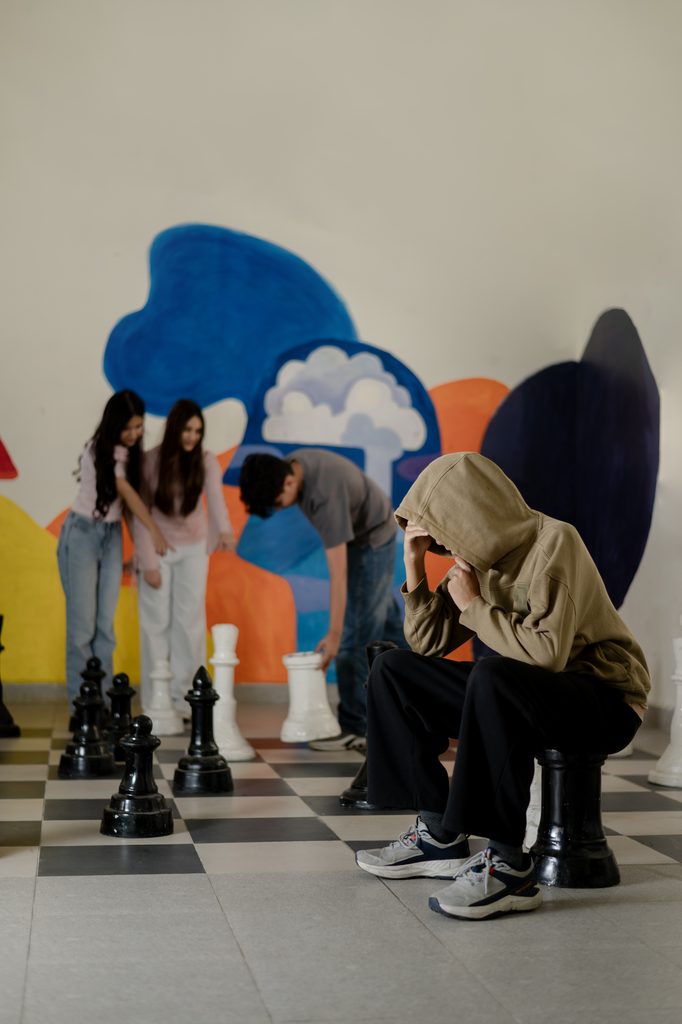
Teenagers on friendship, family, privacy and being understood
How can you tell the difference between a friendship that supports your well-being and one that drains it?
Yes, I think having the right group of friends deeply affects my mental health. Supportive friends give me a safe space, boost my confidence, and reduce stress during tough times. Hanging out with positive, encouraging people builds my resilience, personal growth, and a genuine sense of belonging and happiness that keeps me balanced. Tuviah Gadia, 14
A friendship that supports your well-being makes you feel happy, respected, and comfortable. You can trust each other and share your feelings. A draining friendship often leaves you feeling stressed, sad, or unappreciated. Good friends support you, while unhealthy friendships may bring unnecessary pressure and negativity.
Prasiddha Shah, 13
Do you think the family environment can sometimes create mental pressure for a teenager?
Yes, even without realizing it, family can sometimes add to a teenager’s stress. When everything is about marks, career, and comparing you with others, it can feel like you’re never good enough. Constant arguments, little privacy, or being told you’re always on your phone can make you feel misunderstood, pressured, and emotionally tired.Arhana Saakha, 14
Do you think the adults around you have proper mental health knowledge, or mostly a superficial understanding of common issues?
I think most adults have a superficial understanding of mental health problems, especially in Nepal. They might know basic terms like “stress” or “anxiety,” but real struggles usually get dismissed as “overreacting” or “just a phase.” There’s a big difference between hearing these words everywhere and actually getting the pressure teens deal with today, so sharing how you feel usually ends in getting advised instead of getting understood.
Arjun Sapkota, 14
Many teenagers feel adults have only a superficial understanding of mental health, leading youth to filter what they share out of fear of judgment. While peers offer relatable, stigma-free support, safe adults listen without lecturing. Additionally, casual social media use of terms like “trauma” helps normalize mental health conversations but risks creating confusion through inaccurate self-diagnosis.
Mihir Agrawal, 14
What’s something you wish your parents understood about what’s going on in your head, but you don’t know how to say?
One thing I wish my parents understood is that I need both space and privacy. Wanting privacy doesn’t mean I’m hiding things or keeping secrets from them. I just want to spend time by myself, or deal with something on my own without feeling like I’m being judged or questioned about things. I still want to be able to come to them when I need help, but I think having some space would help me feel more trusted.
Saanvi R. Shrestha, 14
What’s the difference between an adult who makes you feel safe enough to open up and one who makes you shut down?
I think the biggest difference is how they react. If an adult listens to you properly, doesn’t interrupt and doesn’t immediately judge you and lecture you, you will feel more comfortable. But if they get angry make fun of what you are saying and starts lecturing you , you’re probably going to shut down and not want to share anything else. Even if they don’t agree with you, knowing that they’ll listen calmly makes a big difference.
Aashriti Shrestha, 14
Do you think words such as “trauma,” “anxiety” or “ADHD” are sometimes used too casually by teenagers?
Yes, I do think they can be used to casually by teenagers especially on social media. people may see a few ADHD or anxiety symptoms in a TikTok video or an Instagram reel and immediately think “I have that” without really knowing what else could be causing those feelings. it can create confusion because trauma, ADHD and anxiety are real conditions that can affect people’s everyday lives in ways that aren’t always shown online. I think awareness is important, but there’s a difference between relating to something online whereas self-diagnosing from a few videos which can create confusion and misunderstandings
Arza shrestha,14
Do you feel you can tell your parents when something is really wrong, or do you filter what you share?
Why I think most of us filter some things or the other even if we’re close with our parents. Personally, I’m pretty comfortable telling my parents when something’s wrong. But sometimes I do keep things to myself. Not necessarily because I don’t trust them, but sometimes I just don’t know how they’ll react, or I don’t know how to explain what I’m feeling.
Nora Shrestha ,14
Things like mood swings, withdrawal, or irritability are often labeled as “typical teen stuff” before anyone questions if there’s something more serious. And when something seems off, parents often jump to external reasons like peer pressure or social media, instead of thinking it might be something more serious.
TEENAGE MENTAL HEALTH FACTS & DATA
• As stated by the Government of Nepal, UNICEF & WHO and as highlighted in the 2025 National Mental Health Campaign, 5.2% of adolescents aged 13–19 in Nepal have a diagnosable mental health condition.
• 18.3% (nearly 1 in 5) of children aged 6–18 in Nepal report emotional or behavioural difficulties. This is also cited by WHO and UNICEF from national data
• 1 in 7 adolescents aged 10–19 globally experiences a mental disorder.
• WHO identifies healthy sleep patterns as one of the important protective factors for adolescent mental health.
• Among adolescents, anxiety disorders are more common than depression, with both becoming more prevalent among older teenagers
• The WHO fact sheet also notes that suicide is the third leading cause of death among people aged 15–29 globally
• In Nepal’s 2015 school health survey, 6.6% of adolescent students reported feeling lonely most of the time or always