

By Chef Sandeep K.C
Sacred Wedding Mantras and Their Meaning in Everyday Life
In Hindu tradition, wedding mantras are profound life teachings. These mantras were composed by ancient seers who understood human psychology, nature, and the rhythm of relationships. Each mantra spoken during a wedding is a guideline for how two individuals should live together, grow together, and face life’s responsibilities as one.
Saptapadi – The Seven Sacred Steps
With each step, the couple makes a promise of nourishment, strength, prosperity, happiness, progeny, harmony, and lifelong friendship.
Daily Life Connection
These seven steps are essentially a blueprint for married life. They remind couples that marriage is not just emotional bonding but shared responsibility: cooking together, earning together, caring for health, raising children, and walking together through challenges.
Agni Sakshi – Fire as the Witness
Fire is invoked as the eternal witness to the union. It represents purity, truth, and transformation.
Daily Life Connection
Fire symbolizes discipline and energy, the same qualities needed to sustain a household. Just as fire must be tended carefully, relationships require conscious effort, honesty, and warmth. In ancient homes, the kitchen fire was sacred, linking daily nourishment with spiritual responsibility.
Mangala Ashtakam – Blessings for Prosperity and Stability
These verses seek blessings for prosperity, protection, health, and long life.
Daily Life Connection
The chants reflect a holistic view of success encompassing emotional balance, health, harmony with nature, and social responsibility. This is why traditional homes valued simple, seasonal, and sattvic food as the foundation of wellbeing.
Laja Homa – Offering of Grains
The bride offers puffed grains into the sacred fire, symbolizing nourishment, gratitude, and shared duty.
Daily Life Connection
This act teaches that food is sacred and that nourishment is a shared responsibility. Cooking, feeding, and eating together were never considered chores but acts of love and care, the very glue of family life.
Ashirvada Mantras – Blessings from Elders
Elders bless the couple with strength, harmony, and longevity.
Daily Life Connection
These blessings remind couples that marriage is not isolated rather supported by family, community, and ancestral wisdom. Respect for elders and traditions forms emotional stability in the household.
Why These Mantras Still Matter Today
In modern times, weddings may be faster and lifestyles busier, but the wisdom within these mantras remains deeply relevant. They remind us that marriage thrives not on grand gestures, but on daily acts of care, shared meals, mindful speech, emotional presence, and mutual respect.
When mantra and food come together, they create a living philosophy: to nourish love, one must first learn to nourish life itself.
Food as a Mantra: Creating Harmony Through Everyday Meals
In today’s world, we may not understand every ancient chant, but we all understand the language of food. What we cook, how we eat, and whom we eat with shapes our emotions and relationships. In traditional wisdom, food itself was considered a living mantra, something that carried intention, energy, and care. A warm meal prepared with patience could calm anger, strengthen bonds, and bring emotional balance to a household. Just like a mantra bringing focus and clarity, food prepared with awareness brings harmony into married life. When couples cook together, eat together, and respect the rhythm of meals, they unknowingly practice the same principles our ancestors taught through sacred chants: presence, gratitude, and togetherness. In this way, food becomes not just nourishment for the body, but a daily ritual that strengthens love, understanding, and companionship.
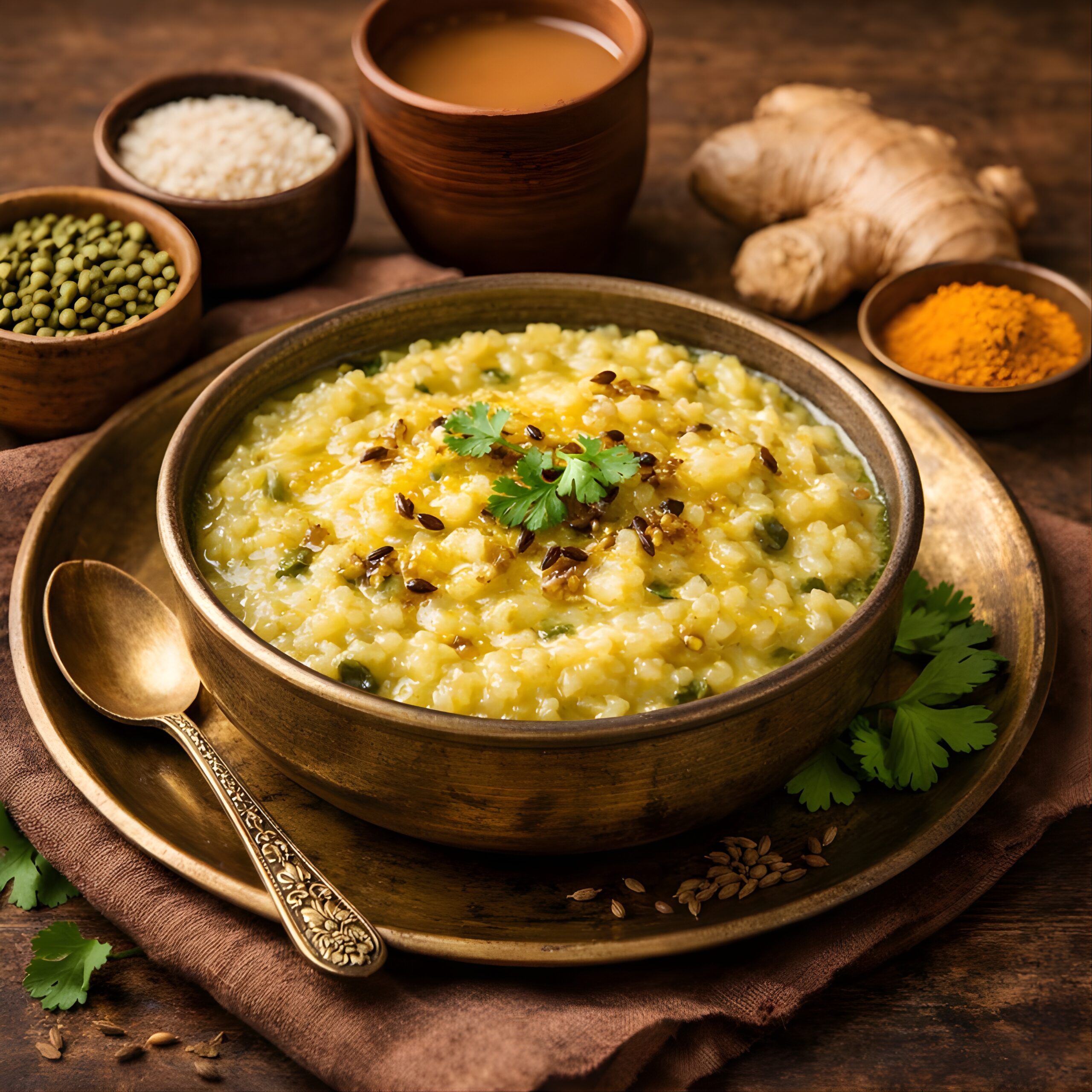
For Men: Strength & Stability Khichdi (Balya Khichadi)
A grounding meal to build stamina, calm the nerves, and support responsibility.
Why this recipe
Traditionally, men were expected to carry physical, emotional, and social responsibility after marriage. This dish is designed to strengthen digestion, improve vitality, and keep the mind calm and not overstimulated.
Ingredients
• ½ cup split green moong dal
• ½ cup aged rice (or red rice)
• 1 tsp ghee
• A pinch of turmeric
• Cumin seeds
• Ginger (small piece, grated)
• Rock salt to taste
Method
Cook rice and dal together until soft and comforting. Temper lightly with ghee, cumin, and ginger. Keep it warm, soft, and moist (never dry).
This meal balances digestion, improves stamina, and prevents heaviness. It supports clarity of thought and steady energy; qualities essential
The First Three Months of Marriage: Nourishing the Body & Bond
e
Month One: Healing, Grounding & Adjustment
To calm the nervous system, restore digestion, and help the couple adjust to shared routines.
Recommended Foods
• Warm, freshly cooked meals
• Rice, soft wheat rotis, and mild lentils
• Ghee, milk, dates, soaked almonds
• Light vegetable curries (pumpkin, bottle gourd, carrots)
• Herbal drinks like cumin–fennel water

For Women: Nourishing Kheer for Balance & Harmony
A gentle, nourishing preparation to restore strength, calm emotions, and support hormonal balance.
Ingredients
• 1 cup milk
• 2 tbsp rice or broken wheat
• 1 tsp ghee
• 3–4 soaked almonds (peeled)
• A pinch of cardamom
• Optional: a few saffron strands
Method
Slowly cook the rice in milk until creamy. Add almonds and cardamom. Sweeten lightly if needed.
This preparation nourishes the nervous system, supports emotional stability, and replenishes energy after the physical and emotional shifts of marriage. It was traditionally given to calm the body and encourage deep rest and emotional warmth.
Why it matters
The body is adapting to new rhythms, sleep patterns, and emotional closeness. Simple, warm foods help reduce stress and support digestion, especially for women adjusting hormonally.
Month Two: Strength, Vitality & Emotional Balance
To build strength, stamina, and emotional grounding.
Recommended Foods:
• Protein-rich foods: lentils, mung beans, paneer, sesame
• Natural tonics: dates, figs, soaked raisins
• Healthy fats: ghee, sesame oil, nuts
• Spices in moderation: turmeric, cumin, ginger
Why it matters
This phase supports tissue repair, hormonal balance, and emotional bonding. Traditionally, this is when couples begin to feel more stable and connected.
Month Three: Energy, Fertility & Harmony
To enhance vitality, intimacy, and long-term wellness.
Recommended Foods:
• Seasonal fruits and vegetables
• Whole grains like barley, millet, and red rice
• Natural sweeteners like jaggery and honey
• Cooling foods such as milk, soaked almonds, and coconut
Why it matters
By the third month, the body settles into rhythm. These foods help balance hormones, boost immunity, and prepare the body for future responsibilities including conception, work, and shared life goals.
” The body is adapting to new rhythms, sleep patterns, and emotional closeness. Simple, warm foods help reduce stress and support digestion, especially for women adjusting hormonally.”
Chef Sandeep Khatri
Conclusion: When Food Becomes a Promise
In ancient wedding traditions, food was never separate from vows. It was a symbol of trust, care, and shared responsibility. The sages understood that a marriage survives not only on emotion, but on daily acts of giving and feeding one another was among the most sacred of them.
One of the wedding mantras gently reminds the couple:
“Annam samriddhyā saha jīvema”
May we live together nourished and fulfilled.
This is not merely about eating well, but about ensuring that no hunger, physical or emotional is left unattended within the relationship.
Another blessing says:
“Saha nāv avatu, saha nau bhunaktu”
May we protect one another, may we nourish one another.
Here, nourishment is not limited to food. It speaks of care, patience, shared responsibility, and emotional safety the true foundations of married life.
In this way, food becomes a daily vow. Each shared meal is a reminder of commitment, balance, and gratitude. When couples cook together, eat together, and honour the rhythm of nourishment, they unknowingly continue an ancient practice where love is not served, shared, and sustained.
for leadership, patience, and responsibility in married life.
Closing Thought
In traditional homes, these foods were somewhat similar to rituals. Quiet, warm, and intentional, they helped couples settle into a shared rhythm of care. Even today, such simple meals can become acts of love, grounding two lives into one steady journey.