

An Ayurvedic Guide for Women’s Wellness
By Chef Sandeep Khatri
Sandeep Khatri
A woman’s energy, fertility, emotional resilience, skin glow, immunity, and even mental clarity flow directly from the purity and strength of her Rakta.
Ayurveda, the ancient science of life, views the female body as a living, sacred landscape that evolves through powerful stages. Each phase from childhood, adolescence, reproductive years, motherhood, and menopause is governed by shifting balances of the three doshas: Kapha, Pitta, and Vata. Rather than resisting these changes, Ayurveda teaches women to honor them through conscious nourishment, routine, and emotional awareness. When these rhythms are respected, a woman builds resilience, radiance, fertility, and deep inner stability that carries her gracefully through every chapter of life.
In childhood, Kapha dominates, giving stability, growth, and immunity. As puberty approaches, Pitta awakens, igniting hormonal activity, menstruation, emotional intensity, and creativity. In adulthood and motherhood, Vata increasingly influences movement, nervous system function, and the rhythms of caregiving and productivity. In later life, Vata becomes predominant, calling for deeper grounding, warmth, and nourishment. Ayurveda does not view these transitions as problems to be fixed, but as sacred biological initiations, each deserving unique dietary, lifestyle, and emotional care.
At the heart of Ayurvedic women’s physiology lies a powerful truth recorded in the classical text Ashtanga Hridayam: A woman’s menstrual essence, bodily tissues, breast milk, hair, and nails arise specifically from her blood tissue (Rakta Dhatu), for she is defined by it. This verse establishes Rakta Dhatu (the blood tissue) as the central pillar of female health. In Ayurveda, Rakta is not merely blood in the modern biomedical sense; it is the carrier of oxygen, hormones, vitality, emotional stability, complexion, and reproductive intelligence. A woman’s energy, fertility, emotional resilience, skin glow, immunity, and even mental clarity flow directly from the purity and strength of her Rakta.
From Rakta Dhatu emerges Aartava; the menstrual and reproductive essence which governs ovulation, menstruation, conception, and hormonal rhythm. During motherhood, this same nourishing stream transforms into Stanya (breast milk), sustaining the child through the mother’s own tissue vitality. Thus, a woman’s health is not only her own; it directly nourishes the next generation. For this reason, Ayurveda places extraordinary emphasis on protecting, purifying, and strengthening Rakta Dhatu throughout life.
When Rakta is healthy, menstruation is painless, regular, and vibrant; the skin glows; digestion is stable; emotions are balanced; and fertility is strong. When Rakta becomes overheated, depleted, or impure through stress, poor digestion, inflammatory foods, toxins, or emotional suppression, symptoms arise such as acne, heavy bleeding, hormonal disorders, PCOS, fibroids, fatigue, anxiety, irritability, and reproductive imbalances. Therefore, Ayurveda’s approach to women’s health is fundamentally Rakta-centered. Nourishing blood becomes the most empowering act of self-care.
One of the most practical ways to protect Rakta Dhatu is through daily routine, known as Dinacharya. This rhythm aligns the body with nature’s biological clock, strengthening digestion, stabilizing hormones, and preventing tissue depletion. A woman’s day ideally begins with warm water upon waking, sometimes infused with a few drops of lime or soaked coriander seeds, to gently cleanse the digestive tract and stimulate Agni (digestive fire). Morning elimination, gentle stretching, oil massage (Abhyanga), and quiet breathing or meditation ground Vata and stabilize hormonal rhythms.
Breakfast should be warm, cooked, and nourishing such as oatmeal with ghee and cinnamon, stewed apples, or rice porridge with cardamom. These foods stabilize blood sugar, calm the nervous system, and support Rakta formation. Lunch, taken between 12 and 2 PM when digestive fire is strongest, should be the largest meal of the day, including whole grains, legumes, seasonal vegetables, healthy fats, and blood-nourishing greens like spinach, beetroot, moringa, and fenugreek.
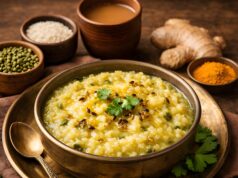
Afternoon calls for gentle hydration. Rose tea, fennel tea, coconut water, or soaked almonds can prevent Rakta dryness and nervous depletion. Dinner should be light, warm, and taken early ideally soups, stews, or moong dal khichdi allowing the body to enter nighttime repair mode without digestive burden.
Beyond routine, Ayurveda gives specific dietary guidance for women based on Rakta sensitivity. Sour, spicy, tangy, fermented, and excessively salty foods known as amla and katu rasas which strongly aggravate Pitta and heat the blood. For women, whose physiology already revolves around cyclical blood movement and hormonal heat, excessive consumption of these tastes can provoke inflammation, acidity, acne, mood swings, heavy bleeding, cramps, PCOS, fibroids, and reproductive disorders. This does not mean these flavors must be eliminated entirely, but they must be respected as strong substances much like medicine. Small amounts enhance digestion; excess undermines tissue balance.
Ayurveda advises that women favor the sweet (madhura), bitter (tikta), and astringent (kashaya) tastes, which cool Pitta, purify Rakta, stabilize hormones, and nourish reproductive tissues. Foods such as rice, milk, dates, figs, coconut, cucumber, coriander, leafy greens, mung beans, pomegranate, rose, fennel, and ghee gently build blood without overheating the system. Spices should be digestive but mild: cumin, coriander, fennel, cardamom, turmeric, and ginger in small amounts. Chili, vinegar, tamarind, pickles, fermented sauces, and excessive citrus should remain occasional, not daily staples, especially during menstruation, pregnancy, menopause, inflammation, or fertility planning.
Sandeep Khatri
Ayurveda offers a radically compassionate alternative: slow down during bleeding, eat warm nourishing foods, avoid cold, stress, fasting, intense exercise, sexual strain, or alcohol, and treat menstruation as sacred restoration.
Alcohol deserves special attention in Ayurvedic women’s health. Classical texts classify alcohol as heating, sharp, drying, and penetrating qualities that directly aggravate Pitta and damage Rakta Dhatu. Alcohol is considered a Rakta Dushaka, meaning it vitiates blood tissue and introduces toxins into circulation. Because Aartava (reproductive essence) is refined from Rakta, alcohol disrupts hormonal balance, menstrual regularity, fertility, emotional stability, and tissue regeneration. Ayurveda traditionally advises that women avoid alcohol altogether, or consume only minute amounts under special circumstances, ideally as medicated wines (Asava-Arishta) used therapeutically rather than recreationally. Modern Ayurvedic guidance allows that, if consumed at all, alcohol should be rare, taken with meals, never on an empty stomach, and avoided entirely during menstruation, pregnancy, breastfeeding, emotional distress, inflammation, or hormonal imbalance.
Beyond food and drink, emotional hygiene is equally essential to Rakta health. Ayurveda recognizes that suppressed anger, resentment, grief, stress, and emotional overload directly heat the blood and disturb hormonal rhythms. Women are biologically designed for emotional sensitivity and cyclical fluctuation; suppressing these rhythms rather than honoring them leads to deeper physiological imbalance. Cooling emotions like forgiveness, gentleness, compassion, rest, creative expression, breathwork, moonlight exposure, nature immersion, prayer, and self-compassion directly purify Rakta and stabilize hormones. Practices such as Shitali pranayama, moon gazing, journaling, oil massage, gentle yoga, and sound therapy soothe the nervous system and restore blood harmony.
One of the most powerful Ayurvedic principles for women is that menstruation itself is not pathology, but purification. The monthly shedding of blood is a cleansing act, a renewal of Rakta Dhatu. When menstruation is painless, regular, moderate, and emotionally balanced, it indicates strong tissue health. When painful, heavy, irregular, or emotionally destabilizing, it signals Rakta disturbance and calls for nourishment, not suppression. In modern culture, women are often taught to override their biological rhythms to push through fatigue, suppress hunger, ignore emotional cycles, override sleep, and chemically silence menstruation-related symptoms. Ayurveda offers a radically compassionate alternative: slow down during bleeding, eat warm nourishing foods, avoid cold, stress, fasting, intense exercise, sexual strain, or alcohol, and treat menstruation as sacred restoration rather than inconvenience. Through this lens, true women’s empowerment is not domination of the body, but harmony with it.
Ultimately, Ayurveda teaches that Ojas, the refined essence of immunity, vitality, glow, and emotional stability is the crown jewel of health. Ojas is built from perfectly nourished tissues, especially Rakta. Alcohol, excessive stress, poor digestion, sleep deprivation, emotional suppression, and inflammatory diets directly deplete Ojas. When Ojas declines, fatigue, anxiety, hormonal chaos, immune weakness, and emotional burnout follow. For women, preserving Ojas is their responsibility. When a woman nourishes her blood, balances her digestion, honors her cycles, and protects her nervous system, she becomes naturally radiant, fertile, emotionally resilient, mentally clear, and spiritually grounded.
Ayurveda does not promise eternal youth, it promises intelligent aging. It does not seek to freeze the female body in one phase but it celebrates its transformations. Through Rakta nourishment, rhythmic living, gentle food, emotional hygiene, and respect for cyclical nature, a woman moves through every stage of life not as decline, but as evolution. This is the deepest Ayurvedic truth: when a woman honors her blood, she honors her life force
Ayurvedic Cooling Sprouted Moong Chatpate
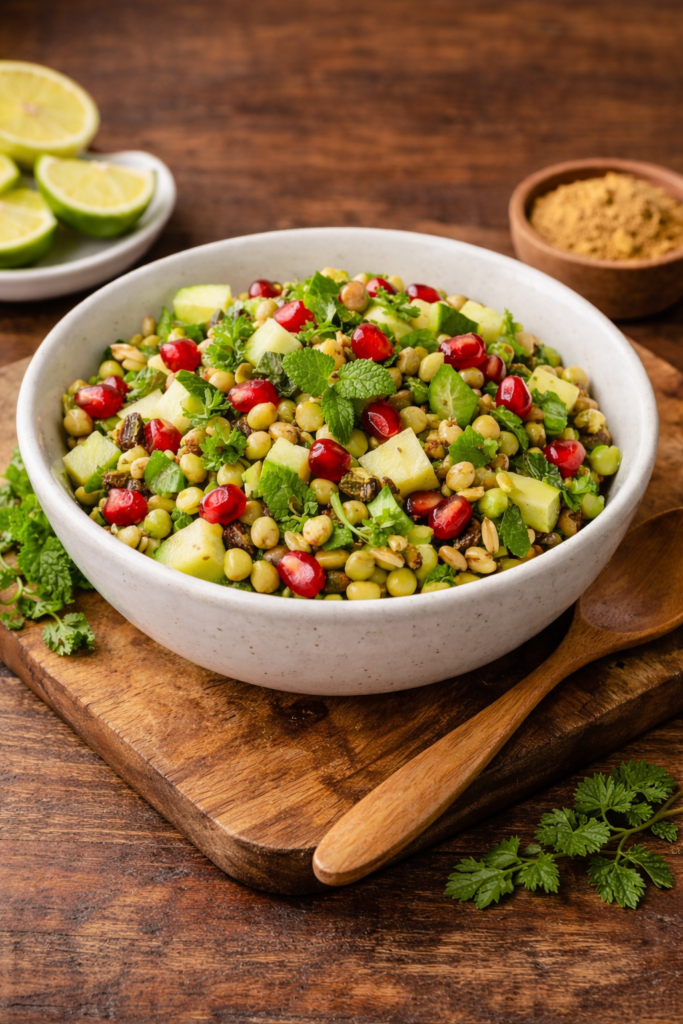
(Balances Pitta, purifies Rakta Dhatu, light on digestion, satisfying without heat)
Ingredients
• 1 cup sprouted green moong, lightly steamed
• ½ cup finely chopped cucumber
• ½ cup pomegranate seeds or sweet ripe mango
• 2 tbsp fresh coriander leaves
• 1 tbsp fresh mint, chopped
• 1 tsp ghee or cold-pressed coconut oil
• ½ tsp roasted cumin powder
• ¼ tsp black salt
• ½ tsp jaggery powder
• 1 tsp fresh lemon juice
• A tiny pinch dry ginger powder
• Optional: Pinch of chili powder (only if needed)
Method
• Heat ghee lightly and sauté steamed moong for 1–2 minutes with a pinch of hing.
• Let cool slightly.
• Add cucumber, fruit, coriander, mint.
• Mix cumin powder, black salt, jaggery, ginger.
• Add lemon juice at the end.
• Taste and add chili only if absolutely needed.
Why This Works (Ayurvedic Logic)
• Moong sprouts → Tridoshic protein, light and blood-nourishing
• Cucumber + mint + pomegranate → Cooling, Rakta-shodhana
• Jaggery + lemon balance → Prevents excess Pitta
• Ghee base → Ojas-building, hormone-supportive
Best Time to Eat
• Lunch side dish
• Early dinner snack
Writer’s Profile
Chef Sandeep Khatri, Pakmharishi, a Glion-educated culinary expert, integrates psychology and food technology, champions Raithane Food, minimizing post-harvest losses, and advocates zero waste.