


By Ananta Ghimire
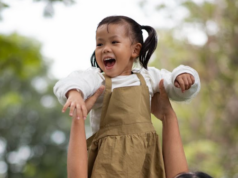
February is considered the month of love. When we think of love, we often picture red roses and lovers. But is the definition of love limited to this? In fact, the purest, most selfless and primitive form of love is seen in the innocent eyes of a small child walking in the warm arms of his mother and holding his father’s finger. On this Valentine’s Day, let’s discuss the special ‘language of love’ and ‘responsive parenting’ that children understand.
Beyond words: Invisible communication
Children have understood the language of love long before they learn grammar and vocabulary. In psychology, this is called ‘Invisible communication’. A baby does not understand your logic but immediately recognizes the softness of your voice and the glow of your face. When we talk to children lovingly, our ‘vibes’ (waves भाव) touch their hearts more than our words. It is an invisible thread that sends a message to the child, “I feel you,” without saying a word.
Theory of Attachment: The Foundation of Trust
According to psychologist John Bowlby’s ‘Theory of Attachment’, a child’s initial emotional relationship with their parents determines their future personality and social health. In the context of Valentine’s Day, for a child, their first ‘Valentine’ or main source of love is their parents. This relationship gives them the self-confidence that ‘the world is safe and I am worthy of being loved,’ a confidence that they carry throughout their lives.
‘Responsive Love’: The Essence of Emotional Security
At the heart of healthy relationships is ‘Responsive Love’. It is exactly like ‘serve and return’ in tennis. When a child does something (cry, smile, or pull-on clothes), and the parent responds appropriately and warmly to it, new neurons are connected in the child’s brain.
Emotional security: This is the child’s inner feeling that says, “I am safe here.” When a child knows that his crying or anger is understood by the parent without being rejected, then a sense of security is created in him.
Co-regulation: Before the child learns to calm himself down, he needs to borrow your ‘calm nature’. Real love is when you stand as a strong pillar in his emotional storm.
It is not only the amount of time we give to the child that matters, but how our ‘presence’ is during that time. “Eye-to-Eye Contact” makes a child feel valued. When you bend down to the child’s height and look into his eyes, it releases stress-relieving hormones in his body. You don’t need expensive gifts to express love, just a warm hug and the warmth of your eyes.
Mother’s Silent Presence: A Vivid Example
Imagine a scene where a child is crying loudly. People around him point to toys, but he won’t shut up. When his mother quietly sits next to him or takes him in her arms, the child suddenly calms down. The mother doesn’t say any magic words. It’s just the energy and love of the mother’s body that is telling the child: “You are safe, I am here.”
” It is not only the amount of time we give to the child that matters, but how our ‘presence’ is during that time.”
Natural Positivity
When anyone comes near a child, they feel a natural positivity. Their stillness can make the stresses of our adult lives disappear in an instant. It has the power to wash away. Children are like mirrors; they absorb our love and return it to us through their behavior. It is a natural attraction that cannot be explained in words, only experienced.
Remember this Valentine’s Day, ‘Love is Visibility’. Loving a child means truly ‘seeing’ and ‘listening’ to them. Love is not just about giving and receiving gifts, it is about supporting their ‘big feelings’ and accepting their existence with a smile.
In conclusion, children understand the language of love not in words, but in continuity and empathy. Let us deepen our emotional connection with our children on this festival of love. Give them time, listen to their unspoken stories and make them feel that they are the most precious gift in this world.
Profile of Writer:

Ananta Ghimire is an Early Childhood Development (ECD) consultant, communication strategist, and educational entrepreneur with experience in early learning, parenting education, and social and behavior change communication. He has worked with organizations including UNICEF Nepal, JSI, and Antenna Foundation Nepal. An MPhil scholar in Educational Leadership, he is the co-founder of TAALI Education and Research, BeeBird Media and Communication Consulting, and Sachitra Kitab, and a member of Smart Parenting Nepal, with a professional focus on strengthening teachers’ communication skills and promoting evidence-based early learning and parenting practices