



RIGHTS BEGINS ONLY AFTER THIS
By Sunita Adhikari
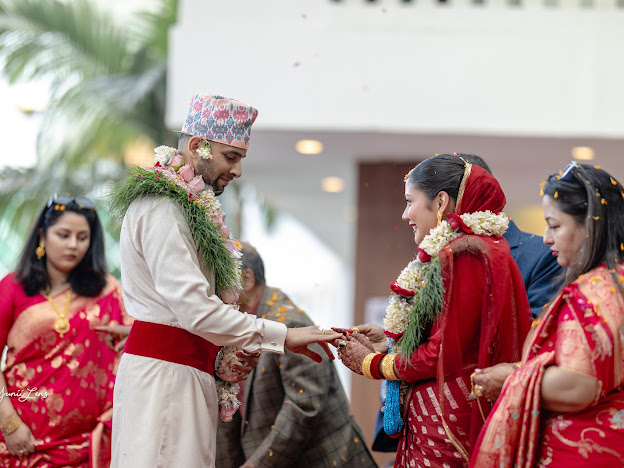
In Nepal, marriage is generally regarded as the lifetime commitment, which socially, culturally, spiritually as well as legally unites two individuals. Deeply embedded in religious rites, family bonding and social acceptance, marriage is more often considered a holy institution than the personal contract. We can add up that the marriages in Nepal are basically celebrated to strengthen family bonds, maintain social cohesion and ensure continuity of culture.
Marriage Registration – As the Basis for Legal Rights Protection
Marriage, traditionally viewed as a religious and social ceremony, does not by itself create legal rights and obligations between spouses unless it is formally recognized by law. From a legal perspective, the rights, and responsibilities arising out of marriage can only be claimed after the marriage has been legally registered. Otherwise, the married partners remain legally unprotected, regardless of how long they have lived together as spouses.
Marriage Registration in Nepal: Basics
Key Requirements & Steps
- Eligibility: Both individuals must be over 20 years old.
- Bachelor/Single Status Certificate: Obtain this from your local Ward Office stating you are unmarried/divorced.
- Temporary Residence Certificate: Required from the ward where you’re registering if it’s not your permanent address.
- Application & Documents: Submit to the District Court or Ward Office.
Key Documents - Citizenship Certificates (photocopy).
- Consent Deed (Swakar Patra).
- Passport-size photos (4 copies each).
- Witnesses (2 from each side).
Court Process: The court examines documents and approves the registration, issuing the certificate quickly, sometimes within 2 days.
Court Registration Fee: Around NPR 500.
Authority where the marriage is registered
Applying it to the Nepali scenario, the institutions that have the legal power to register marriages as well as give legal recognition to these marriages in the form of registration are either the ward office of the concerned municipality or village in which the individuals resides, or the District Court of Nepal which gives an alternative method of the official registration of the marriage in a lawful way, which is referred as “the marriage through registration” between the couple.
Spousal Rights Arising Only After Registration
The notion ‘rights begin only after this’ holds considerable significance in relation to marriage, since numerous legal protections and privileges that flow from marriage do not become operative or legally recognized until the marriage is officially and legally registered.
A primary provision of registration is the establishment of the right to legal support, which assists a wife in asserting a claim for support in relation to her living needs in terms of health and nutrition.
At the same time, the spouses are guaranteed legal rights to property acquired jointly, through inheritance, or succession, ensuring they are recognized as lawful heirs without disputes or disinheritance. These rights provide legal protection and actionable claims over family property, enhancing their economic security and legal standing under the law.
Alongside this, the registration of marriage gives the right to file for divorce, judicial separation, and related relief, the right to obtain alimony or compensation for the dissolution of marriage, abandonment of marriage, and domestic violence, as well as the rights pertaining to the custody of children. It gives the right of parents to claim legally enforceable responsibilities with regard to the health, upbringing, and guardianship of the children resulting from the marriage. In addition to this, a registered marriage grants couples legal protection against domestic violence, abuse, and abandonment through access to remedies, protection orders, and enforcement under family and criminal law.
Moreover, registration entitles couples to social security and spousal benefits through pensions, health insurance, tax concessions, and so on. It also grants couples legal representation and decision-making authority in matters of health, law, and governance. From this perspective, a marriage acknowledged by law, even if rooted in religious tradition, serves as a formal institution that empowers both partners, particularly women, to exercise their social and legal rights.
Lastly, having an official registration as a married couple gives each of the spouses the right to represent the other in major situations like health care, lawsuits, and so on.
Therefore, registration of marriage marks the basis of the rights, as it grants them the protection and power that they deserve. This allows them to enjoy their rights as spouses with limited social recognition of their marriage.
Why Registration matters; Importance of Marriage Registration
Registration of marriage is more than just obtaining an official certificate. It itself is the source for the legality of the marriage between the husband and the wife in a general sense.
It provides the legal validity on marriage
It officially gives the marital relationship legal recognition by bringing it within the ambit of formal law so that such a marriage is recognized and protected by the state authorities and enforced, whichever way it has been solemnized, whether under religious rites, customary practices, cultural traditions or social ceremonies.
Serves as the legal proof of marriage
The Marriage Certificate that is duly registered plays an essential role as a legal document. It officially verifies and recognizes the marriage between the two parties. In other words, the marriage registration certificate is of great importance in the definition of the rights and responsibilities of the concerned parties.
Safeguards Women’s Rights and Legal Protection
The importance of registering marriage is even more critical to women because it is, in most cases, impossible to access their legal recognition as wives in the absence of registration, as the lack thereof can make it very difficult for them to prove their legal status as a wife to claim rights with regards to support, property, or compensation in the case of marital dissolution, abandonment, or something like that. Marriage registration upgrades the status of a woman and provides her with the official legal protection.
Secures the Children rights
Registration of marriage provides a secure legal system that safeguards the interest of minors by ensuring undeniable proof of ancestry and genetic lineage.
Official marriage registration provides a simplified process of accessing other vital documents such as birth certificates and simplifies the procedural requirements for acquiring citizenship or nationality, also provides a secure path through which a child can access their legal rights to inheritance. Furthermore, it provides a secured path through which a minor can access mandatory social security benefits as well as educational opportunities.
By providing absolute legal clarity regarding the relationship between parent and child, registration serves the best interests of the minor by eliminating potential disputes and fostering a stable, conflict-free environment for their upbringing.
Ensures marital rights
Registration of marriage involves the legal procedure that gives meaning to a social marriage and officially acknowledges the marital status with the authorities. It marks the beginning of the rights between the two partners with some benefits such as financial support, equal division of property, and recognition as an immediate family member in case of a medical emergency.
Marriage Registration-“A Prerequisite for Divorce”
Marriages that are conducted solely according to traditional, religious, or customary practices but have not been officially registered with the competent authorities face significant legal limitations, particularly in matters of divorce. Consequently, if the parties involved wish to dissolve the marriage, they cannot do so through the formal legal process unless the marriage is first registered with the appropriate authority, such as the local ward office or the District Court because courts can exercise jurisdiction only over legally recognized marriages. This underscores the critical importance of marriage registration, as it not only establishes the legal existence of the marital relationship but also enables spouses to exercise their rights, claim property, and, if necessary, pursue divorce through the legal system, ensuring that all marital obligations and entitlements are formally acknowledged and enforceable.
” this underscores the critical importance of marriage registration, as it not only establishes the legal existence of the marital relationship but also enables spouses to exercise their rights, claim property, and, if necessary , pursue divorce.”
Sunita Adhikari
The first step for the dissolution of a marriage is marriage registry, as the court will only take up the matter when presented with a marriage certificate. Without the marriage certificate, the court has no recognized marriage that it has to annul, and often, couples must go through a pre-process called marriage validation.
A legally registered marriage sets the date of marriage, which may be important for calculating spousal support or alimony. This date helps ensure maintenance is determined in a fair way and protects a dependent spouse from being denied the support to which they’re entitled.
Marriage registration plays a crucial role in the division of marital property by clearly defining the “marital estate.” It establishes the official start date of the marriage and identifies assets acquired during the union, which, in many legal systems, determines what is considered jointly owned, while pre-existing property remains separate. By providing verifiable documentation, registration reduces the risk of asset concealment or misrepresentation regarding acquisition timelines, ensuring that both spouses receive a transparent, equitable, and legally enforceable share of the wealth accumulated during the marriage.
When a registered marriage is dissolved, official records are amended and necessary documents, such as a divorce or Single Status Certificate, are issued to enable lawful remarriage. In the absence of such formal records, individuals may face legal uncertainty, be unable to prove their unmarried status, and risk criminal liability for bigamy if they enter into another marriage.
Conclusion
Indeed, many families are comforted with the understanding that their religious wedding is all the commitment they need as a partnership. In other words, these people do not go out of their way to register their marriages, nor do they disregard the entire process; instead, they find themselves either ignorant or intentionally oblivious to the fact that formal recognition is attained by registration. In a community that values both family and justice, the importance of registering one’s marriage becomes paramount. Registration does not go against tradition; instead, it now includes security. In practical terms, registering one’s marriage means transitioning from recognition to affirmation, that is, where rights begin.