


By Malika Joshi
Long before she was a titan of the education sector, Shailaja Adhikary was a young teacher who felt a spark in the classroom that a stable career in banking couldn’t replicate. That “call back” to the classroom eventually transformed the educational fabric of Nepal.
Today, as she balances the demands of a Doctorate with the leadership of twelve institutions, her focus remains remarkably grounded: nurturing the confidence and curiosity of the next generation. We sat down with the founder of EuroKids and IEC to discuss the family support system that fuels her resilience, the transformative power of the IB Programme, and her relentless drive to create an impact that outlives titles and recognition.
As the founder of institutions like Euro School, EuroKids, and IEC College of Arts and Fashion, what guiding principle has remained constant across these diverse educational ventures?
Across all my educational ventures, one guiding principle has remained constant: the belief that education must empower individuals to discover their true potential. Whether in early childhood, formal schooling, or creative education, my focus has always been on nurturing confidence, curiosity, and character.
I believe education extends far beyond academics. It is about shaping mindset, values, and independent thinking. Regardless of the institution, the goal has always been to create environments where students feel inspired to learn, grow, and lead with purpose.
What led you to transition into education and entrepreneurship after banking?
My first job was in a school just after my ISC, where I taught for a few months. Though brief, that experience stayed with me. I then began my formal career with Grindlays Bank, now Standard Chartered, which offered stability and structure. However, I always felt something was missing. The joy and purpose I experienced in the classroom kept calling me back. I realized my true passion was in shaping young minds. That clarity gave me the courage to leave banking and fully commit to education, eventually growing into entrepreneurship with a deeper impact.
At a time when creative fields were often overlooked in Nepal, what inspired you to invest in this space?
At a time when creative fields were often overlooked in Nepal, I chose to see possibilities rather than limitations. I believed that creativity is not secondary to intelligence; it is a powerful form of it, with real impact and opportunity. This belief came from recognizing the immense, untapped potential of Nepali youth. It was always about expanding it to make space for new ideas, new careers, and new forms of expression. This was my way of opening new doors for the next generation.
” Across all my educational ventures, one guiding principle has remained constant: the belief tht education must empower individuals to discover their true potential.”
Your work spans both creative education and formal schooling. How do you see the relationship between creativity and academic rigor in shaping well-rounded individuals?
I see creativity and academic rigor not as opposites, but as powerful complements in shaping well-rounded individuals. Through IEC College of Arts and Fashion, we nurture creativity, innovation, and self-expression, while at Euro School, an IB institution, we emphasize critical thinking, discipline, and global perspectives. When these approaches come together, they develop individuals who are not only knowledgeable but also imaginative, adaptable, and solution-oriented. This balance is essential in today’s world, where success is defined not just by what you know, but by how effectively and creatively you apply it.

Bringing international frameworks, such as the IB Programme, to Nepal is a significant milestone. How does global education redefine the aspirations and identity of Nepali students today?
Bringing global education frameworks like the IB Programme to Nepal has been transformative for our students. It expands their horizons beyond borders, encouraging them to think critically, act responsibly, and engage with the world with confidence. Global education reshapes aspirations by showing students that their ambitions are not limited by geography. It nurtures a mindset that is both globally aware and deeply rooted in Nepali identity. Today’s students are not only prepared to succeed, but to lead, innovate, and contribute meaningfully on a global stage while staying connected to where they come from.
” today’s students are not only prepared to succeed, and contribute meaningfully on a global stage while staying connected to where they come from.”
How has lifelong learning influenced your leadership journey?
Lifelong learning has been the foundation of my leadership. It has kept me curious, adaptable, and open to diverse perspectives across cultures and industries. Each experience has shaped not only my knowledge but also my ability to lead with empathy and clarity. To me, leadership is not about having all the answers. It is about continuously evolving, listening deeply, and growing alongside the people you lead.
Beyond professional achievements, what continues to drive you?
Beyond professional achievements, what drives me most is purpose, the desire to create impact that outlives titles and recognition. I am deeply motivated by empowering others, especially the next generation, to believe in their potential and pursue paths once thought impossible. I am inspired by growth, meaningful change, and the responsibility to give back to the society that shaped me. For me, it is not just about success, but about significance, legacy, and making a difference where it truly matters.
Behind every strong professional journey is a personal support system. How has your family influenced your path?
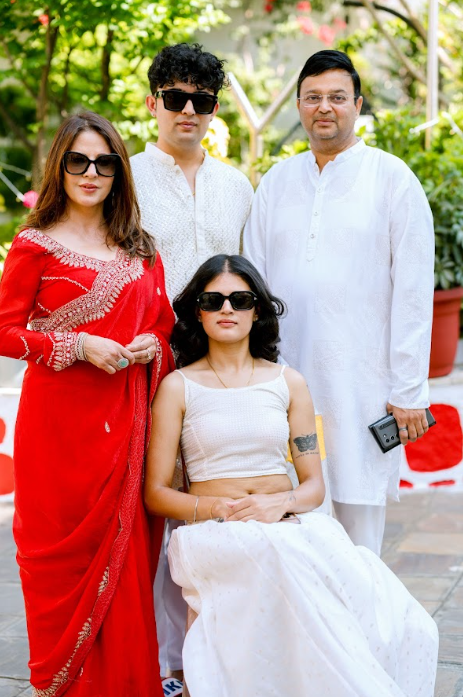
Behind every milestone in my journey is the unwavering support of my family. My parents were my first pillars; they encouraged my vision and gave me the confidence to take bold steps. Their belief in me laid the foundation for everything that followed.
My husband, my son, and my daughter have been my constant source of strength and inspiration. Their support through challenges and their presence in moments of success allow me to lead with courage and purpose. Much of what I have achieved is deeply rooted in their love and encouragement.
What advice would you give to young entrepreneurs and aspiring leaders in Nepal?To every young entrepreneur and aspiring leader in Nepal, start before you feel ready. You do not need perfect conditions, only courage and consistency. Believe in your vision, even when others do not fully understand it yet. Be willing to learn, unlearn, and grow, because leadership is built through resilience, not comfort. Do not be afraid to challenge norms, but always remain grounded in integrity and purpose.