



Ancient Nepali Winter Immunity Wisdom
By Chef Sandeep Khatri
Winter in Nepal is a slow ritual of preparation a seasonal intelligence handed down through generations. While the modern world stocks supplements, our grandmothers quietly built immunity through fire (digestive strength) and warmth (fats, broths, fermented foods, and mindful seasonal rhythm). In this ancient Nepali wisdom, winter wellness is not an external fix but an internal cultivation. Immunity is crafted in the kitchen, in the way we breathe, in how we rest, and in how we align with nature’s cooler turn.
Momo: The Steam of Winter
Winter without momo is incomplete. There is a reason momo tastes different in the cold. The rising steam, the warmth of the chutney, the sesame-timur kick; it becomes more than comfort food. In winter, momo becomes a symbol: heat meeting cold; fire meeting ice. It is a sensory metaphor for how Nepali winter immunity is not just biology, but emotion, ritual, and seasonality.
” Yomari, a winter delicacy provides energy with its rice flour while the rich filling of chaku and sesame seeds generates internal heat and supports circulation. Packed with natural sugars, iron, and healthy fats, it helps the body stay energized through cold days.”
Chef Sandeep Khatri
Thukpa: Broth as Breath
Thukpa is winter medicine disguised as soup. A bowl of warm broth, ginger, garlic, mountain herbs and noodles give a respiratory therapy. The vapor opens the sinus, the spices ignite Agni, and the slow warmth regulates Vata. Thukpa brings the body back into circulation especially on cold nights.
Thenduk: Kneaded Dough, Kneaded Heat
Thenduk is the humble genius of Himalayan food culture, dough torn by hand into clear broth, cooking into soft strips that absorb flavor like memory. This dish is winter pragmatism: one pot, minimal fuss, maximum warmth. In Ayurveda, this is functional starch – grounding, comforting, and sustaining fire without heaviness.
Renduk: High-Altitude Winter Craft
Renduk is a seasonal engineering. In high altitude communities, climate shapes cuisine. Renduk, slow cooked, often meat-based, layered with spice and fat is resilience food. It is designed to deliver deep warmth, long-lasting satiety, and stable digestion in harsh cold. Renduk is the psychology of survival expressed through flavor.
Difference Between Thenduk and Renduk
Thenduk is essentially hand-pulled or hand-torn noodle strips cooked in broth. The dough is stretched or pinched directly into the boiling soup, giving soft, ribbon-like pieces. It is light, quick to make, and everyday winter comfort food that’s more soup-forward, more about broth and agility.
Renduk, on the other hand, is a slow-cooked winter stew, often meat-centric and designed for stamina at high altitude. It is richer, fattier, more layered, and more sustaining. Renduk is engineered for longer cold exposure, deeper warmth, and calorie density.
Rildok
Rildok is a beloved Sherpa high-altitude dish that transforms humble potatoes into a creamy, sustaining meal. Boiled potatoes are pounded until smooth and elastic, then shaped into soft
potato balls and simmered in a creamy white broth made from yak butter, milk, or light bone stock. The result is a velvety, soul-warming bowl rich in starch and gentle fat that restores body heat and energy in the freezing Himalayan climate. Lightly seasoned with Himalayan salt, garlic, and timmur, Rildok reflects the Sherpa wisdom of balance: nourishing the body with warmth and calm while maintaining simplicity born from mountain resilience.
Mustang, Manang & High-Altitude Winter Reminders
High-altitude food culture is not fashionable storytelling, it is survival science written in taste. In Mustang and Manang, winter is not a temperature drop, it is a shift of existence. Food becomes architecture for endurance. Fat is not indulgent, it is insulation. Broth is not thin-soup, it is respiratory insurance. Renduk, dried yak cheese, barley porridges, smoked meats, fermented greens, these are not random recipes but seasonal logic. High altitude culture teaches one truth clearly: winter must be prepared for, not reacted to. Their cuisine is a reminder that winter wellness is not built during the season, but before the season arrives.
” Taruwa is dish made up by dipping vegetables in seasoned batter and pan–fried. The warmth of oil, the grounding of root vegetables, the spice layer, the crunch, it creates immediate heat in the digestive tract.”
Chef Sandeep Khatri
Newari Winter Preparations: Culture of Immunity
Newars understood winter as a time to fortify. Their seasonal eating is not merely culinary identity but is metabolic intelligence. Saag, chiura, haku choila, bone broths, malaa, bhuttan, and the ritual of slowly dried meats all functioned like winter armour.
Even the famous yomari season in Poush is not random. It is crafted with warm jaggery, rice dough, sesame and steamed to warm body. The Newari winter pantry is a reminder that heritage is not nostalgia, it is lived biochemistry. When cultural food aligns with season, wellness is not external, it is embodied!
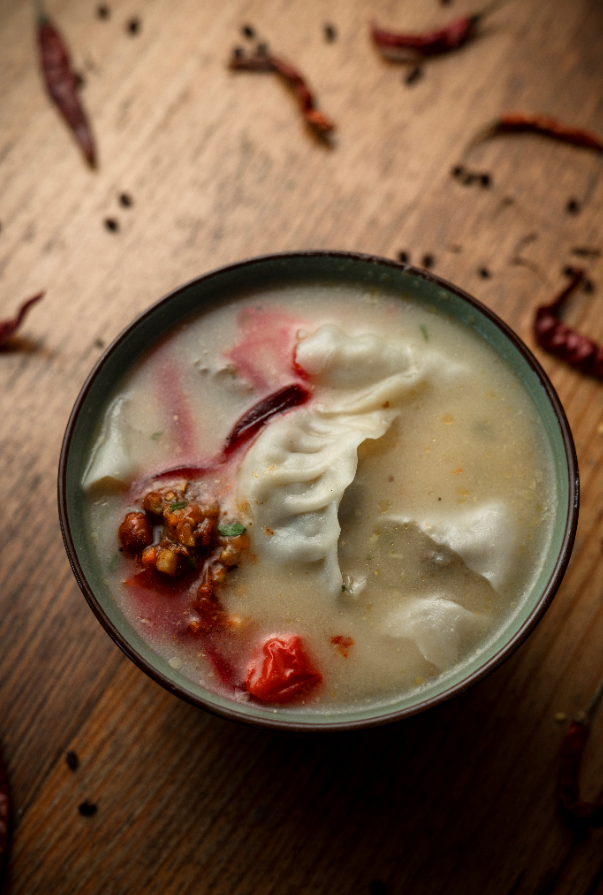
Jaad ko Jhol
(also called Aaila-maa Khwā-yaa Jhol in Newari context)
“Jaad” refers to the sour fermented curd / whey left from alcohol making (raksi brewing base) and “Jhol” means broth / soup. This is the ancestral winter broth made from the sour whey left after Aaila fermentation simmered with bones to create a warming, collagen-rich winter tonic.
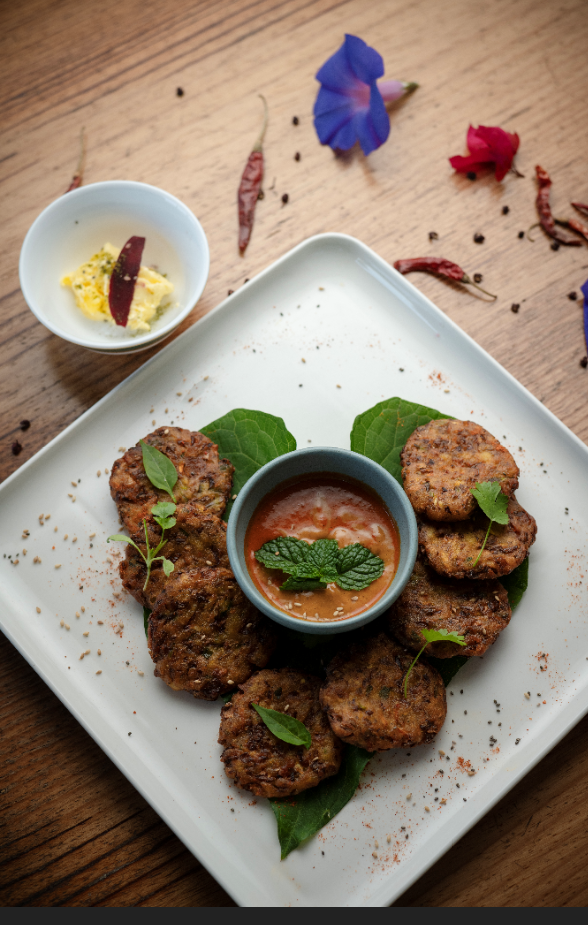
Taruwa: Choudhary’s Winter Logic
In the plains, among Tharu, Choudhary and Madhesi households winter wellness takes a very different, yet equally intelligent form. Here the body does not battle altitude, it battles damp cold and fog. Taruwa is dish made up by dipping vegetables in seasoned batter and pan–fried. The warmth of oil, the grounding of root vegetables, the spice layer, the crunch, it creates immediate heat in the digestive tract and holds the system stable against humidity chills. Mustard oil is central ingredient that’s sharp, pungent and Vata–regulating. Combined with gram flour, ginger, turmeric and seasonal produce, taruwa becomes a winter tool.
Kshetri Winter Eating
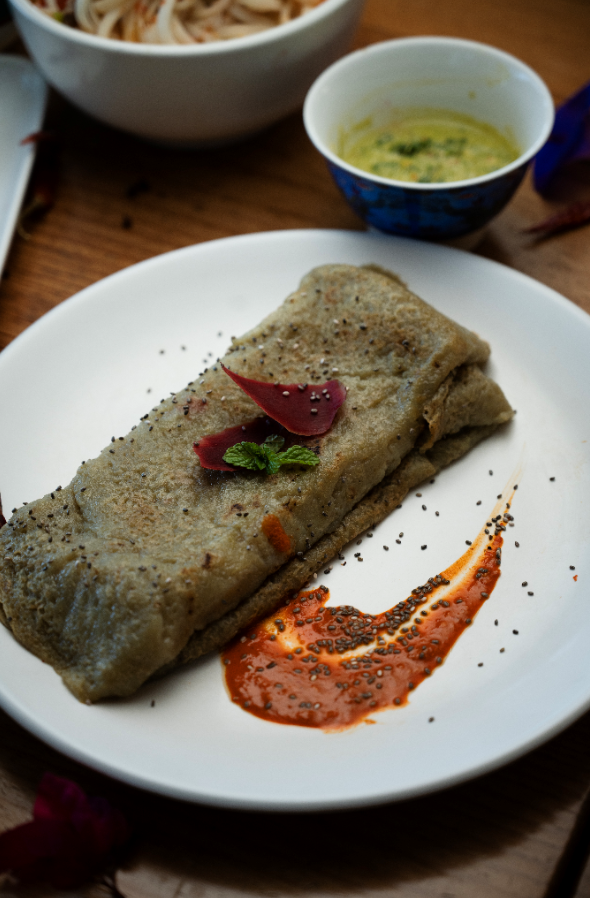
Among Kshetri households, winter eating has always been about strength with clarity – no excess, but no compromise on warmth. Goat meat curries slow–cooked with timur and sutho, fried buckwheat rotis brushed with ghee, hot jhol of lentils, and rice eaten with a thicker, fattier grav. It is winter pragmatism. Kshetri food culture in cold months focuses on muscle–building proteins, digestible starch, and warming spices, the kind of food that prepares the body for physical resilience in harsh climate. Ghee in morning rice, ginger–heavy achar, and simple root vegetables roasted on a fire all reflect the same principle: winter immunity is earned through simplicity, heat, and nutrient density.
” From the Sherpa hearths of the high Himalaya to the Lo people of Mustang, from the Tharu–Choudhary plains of the Terai to the Newari inner–valleys, every community of Nepal carried its own winter intelligence.”
Chef Sandeep Khatri
Winter Immunity Was Always Our Inheritance
From the Sherpa hearths of the high Himalaya to the Lo people of Mustang, from the Tharu–Choudhary plains of the Terai to the Newari inner–valleys, every community of Nepal carried its own winter intelligence. Whether it was bone broth, fermented greens, fatty stews, taruwa, thukpa, momo, renduk or jaad ko jhol, these were not trends. They were metabolic architecture. They were ancestral biochemistry.
Nepal may be geographically small but its food culture is one of the world’s most diverse seasonal immune systems. Every traditional preparation was Ayurvedic at its root: aligned with climate, digestion, terrain, occupation, altitude and season.
Only when canned shortcuts, processed powders, artificial masala, and industrial flavouring entered the kitchen did health begin to drift away.
Our DNA still craves natural food.
Our palate still recognizes ancient memory.
Our body still responds to nature, not packaging.
The soul, mind and body of this land were never western, they were Himalayan, seasonal and intuitive. So let us not imitate the West. Let us take pride. Our food already had what the world is now trying to
” The Sherpa kitchen, like the mountain itself, is a living mandala where Yin and Yang meet in the bowl — the cold of altitude softened by the heat of compassion, creating harmony that sustains both body and spirit.”
Chef Sandeep Khatri
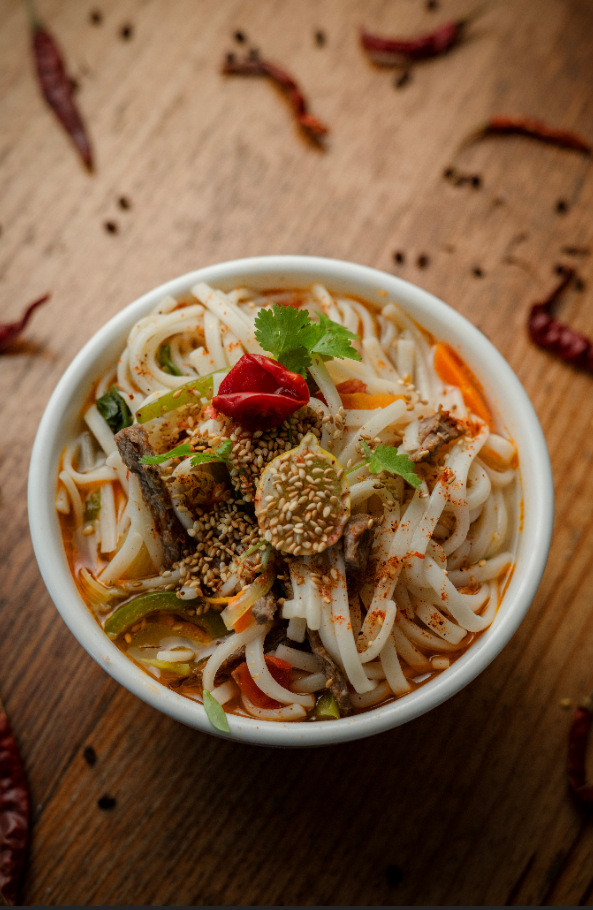
TRIDOSHA RENDUK SOUP – AYURVEDIC BALANCED HIMALAYAN BROTH
Ingredients
• 2 handful Renduk (dried, lightly fermented greens)
• 1 medium potato diced small
• 1 tbsp barley flour (jau ko pito)
• 1 tsp ghee
• 1 tsp black sesame seed
• 1 pinch fenugreek seed
• 1 small piece ginger grated
• 2 pinches timbur powder
• Salt to taste
• 300 ml warm water or light veg broth
Method
• Warm ghee in small pot, bloom fenugreek until light brown.
• Add ginger and diced potato, sauté briefly.
• Add Renduk and warm broth.
• Stir barley flour slurry (mix flour with 1–2 tbsp water first), then pour slowly.
• Simmer 12–15 minutes until velvety body forms, potato soft.
• Finish with sesame + timbur + salt adjust.
Tridosha Logic
• ginger & timbur → Kapha reducer
• barley & fenugreek → Pitta calmer
• ghee & sesame → Vata nourisher
Personal adjust
• Vata dominant → +1 tsp extra ghee
• Pitta dominant → reduce timbur to 1 pinch
• Kapha dominant → finish with small squeeze lemon Serve
Best with barley roti, buckwheat flatbread, or millet roti.
Serving Suggestion: Serve hot, topped with a drizzle of ghee and pinch of timmur.Best enjoyed with barley roti or buckwheat flatbread
The Himalayan Balance of Yin and Yang
In the high Himalayas, food is not merely sustenance — it is philosophy made edible. Rildok, and dishes like it, embody the eternal dialogue between fire and ice, heat and cold, yin and yang. The frozen landscape demands warmth; the human body answers through ghee, spice, and slow simmered broths. Yet even in that warmth, balance is sought — cooling barley, grounding potatoes, and gentle fats temper the flame.
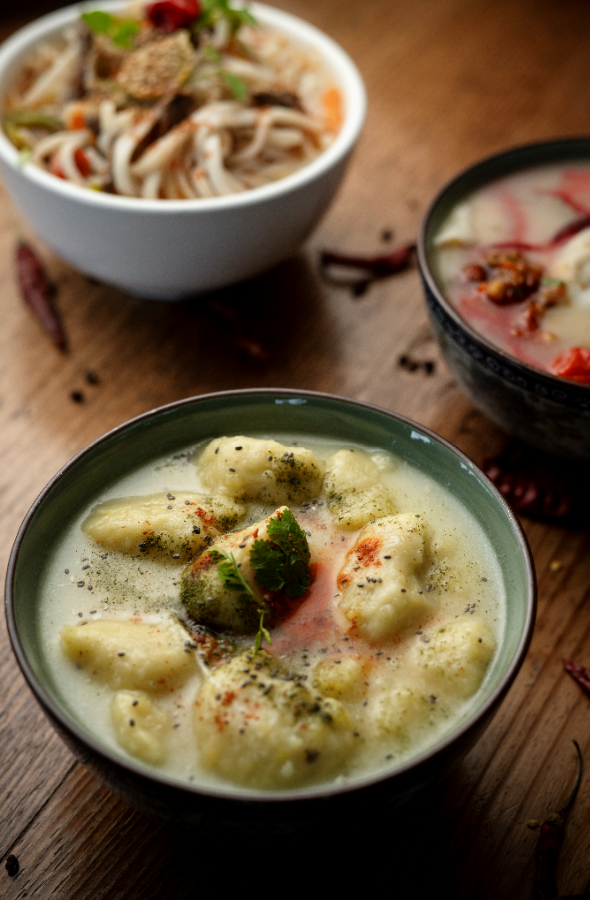
In Ayurvedic and Himalayan thought, this is the art of samta — equilibrium. Fire represents transformation, digestion, and energy; Ice embodies preservation, calm, and endurance. Together, they teach that wellness is not achieved by one force overpowering the other, but by their conversation. The Sherpa kitchen, like the mountain itself, is a living mandala where Yin and Yang meet in the bowl — the cold of altitude softened by the heat of compassion, creating harmony that sustains both body and spirit.